
The Best Photography Locations in Iceland
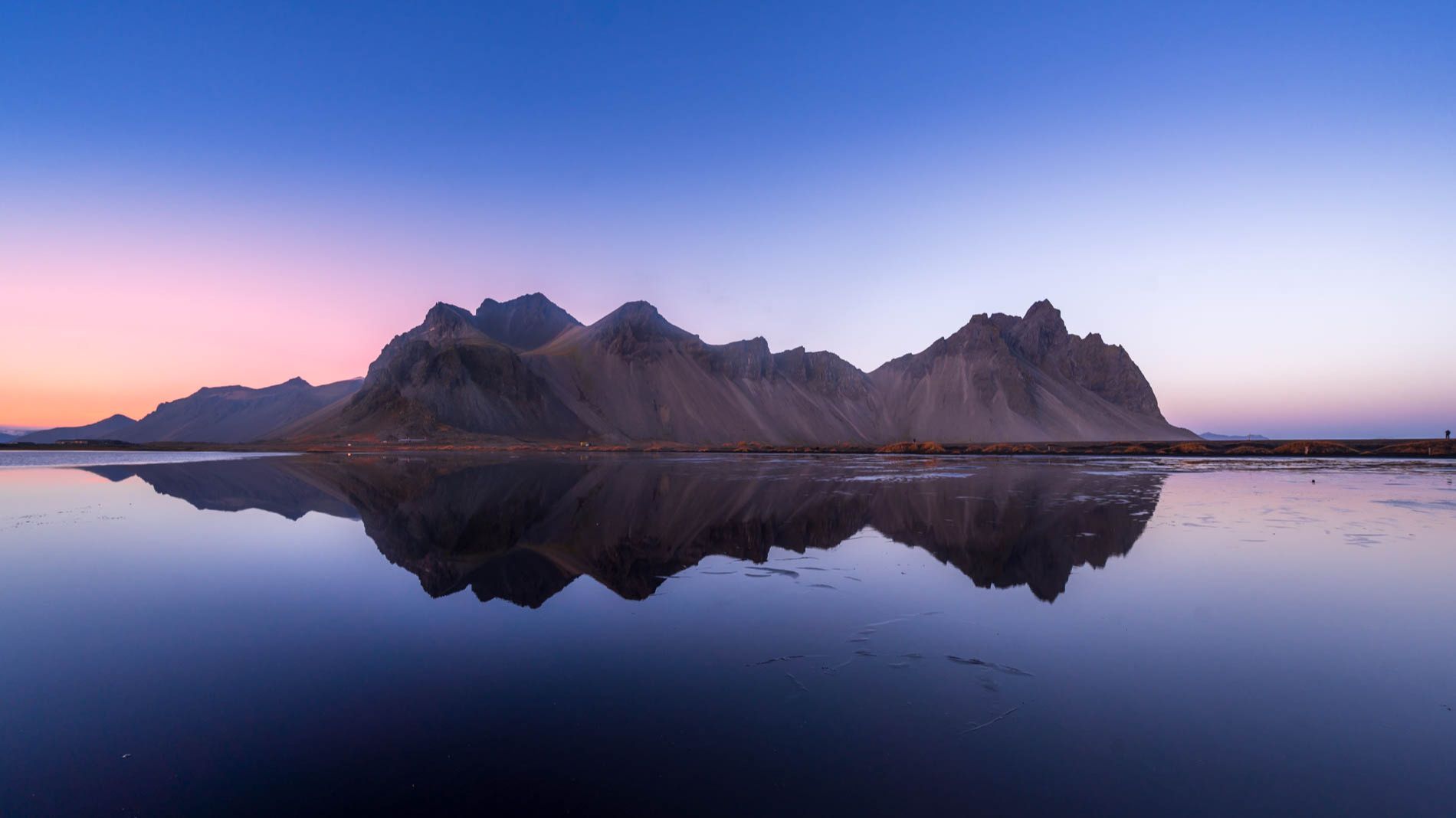
Where I shoot, when to be there, and exactly how — by Serge Ramelli
Hello fellow lovers of waterfalls, glaciers and the wild northern light!
Iceland is a landscape photographer's paradise — fire and ice, black beaches and the aurora, all on one small island. Below are my favourite spots, each with a Google Maps link to the exact place I stood, the camera settings, and the time of day (or year) that makes it sing. If you are still shooting on auto, start with my beginner's guide to landscape camera settings before you land.
One quick tip: Iceland is about water, ice and patience. Bring a tripod and ND filters for the waterfalls and beaches, dress for the weather, and let the conditions dictate the shot — chase the aurora on clear winter nights and the ice caves only with a guide.
1. Skógafoss
📍 Skógafoss (63.532, -19.5114)
One of Iceland's grandest waterfalls — a 60-metre curtain of water you can walk right up to. Shoot it head-on from the black-sand riverbed at sunset, and use a long exposure to turn the falls into silk. Get close and you will need a rain cover for the spray.
Best time: Sunset, with a tripod and an ND filter for the silky water.
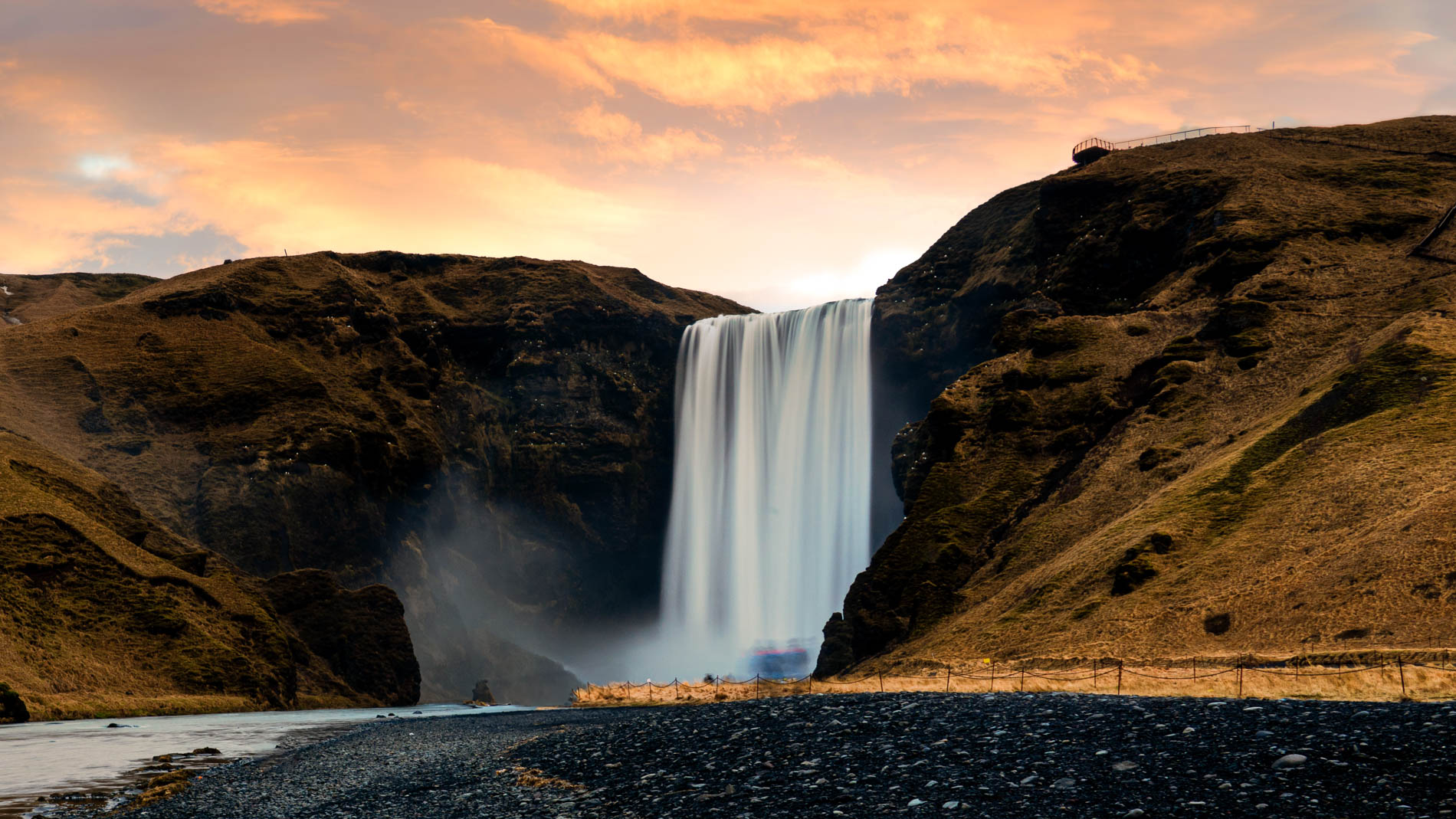 📷 Sony A7R III · 24mm · f/16 · 4s · ISO 50 (tripod + ND)🖼️ Want this as a print, for your website, or for a campaign? License it here — ref. ICE-01
2. Háifoss
A thundering 122-metre waterfall plunging into a vast green-and-rust canyon in the highlands. Shoot from the canyon rim with the winding river leading the eye in, and time it for a dramatic sunset sky over the gorge.
Best time: Sunset; a sturdy tripod near the rim (mind the edge).
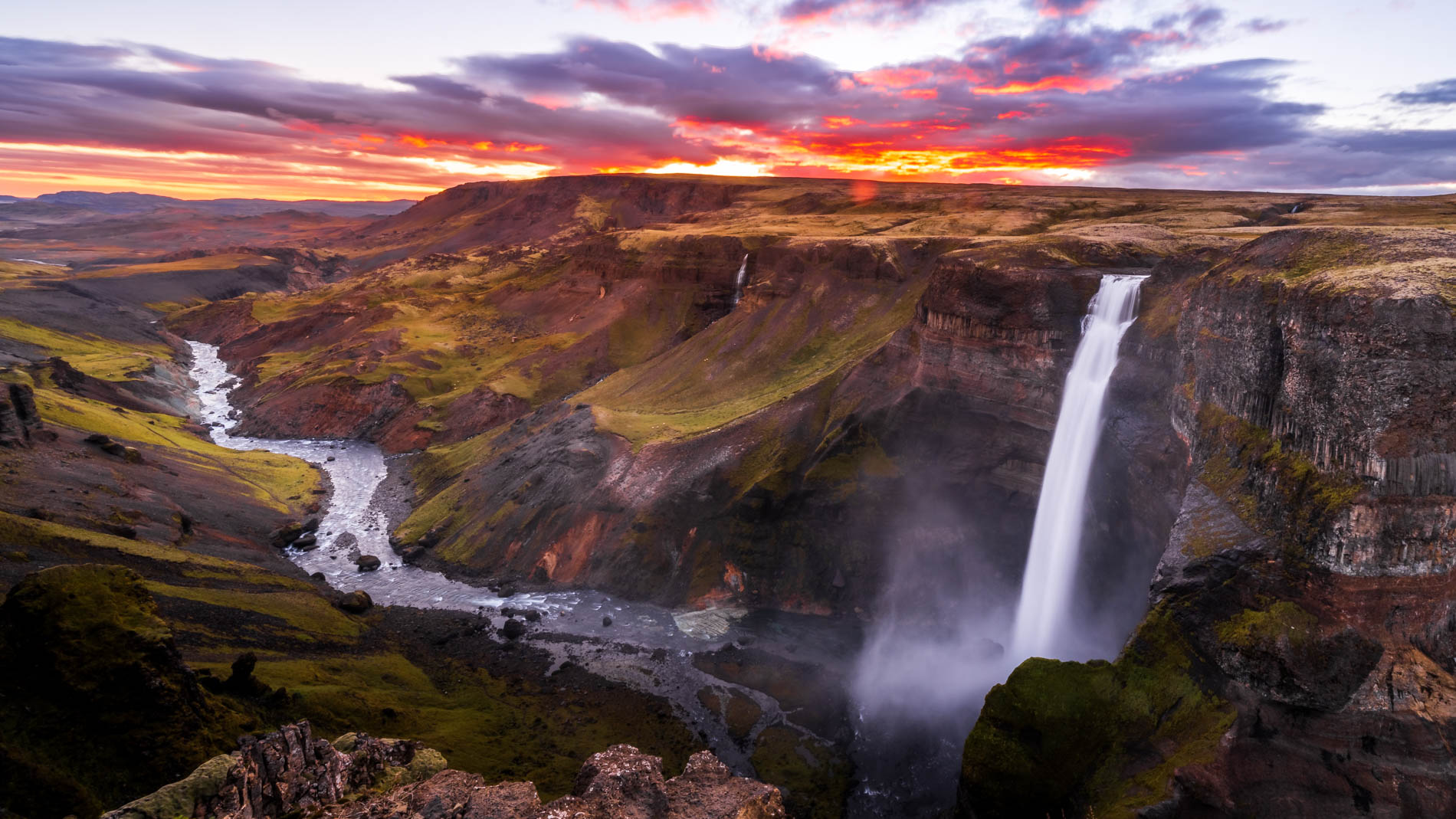
📷 Sony A7R IV · 13mm · f/18 · 1/10s · ISO 50🖼️ Want this as a print, for your website, or for a campaign? License it here — ref. ICE-02
3. Diamond Beach (Jökulsárlón)
📍 Diamond Beach, Jökulsárlón (64.0466, -16.1755)
Chunks of glittering glacier ice wash up on black volcanic sand like scattered diamonds. Get low with a wide lens and use a long exposure so the surf swirls around the ice in silky trails. Every wave rearranges the scene — work fast and keep shooting.
Best time: Sunrise or sunset for colour through the ice; a tripod and ND filter for the swirl. Watch the waves.
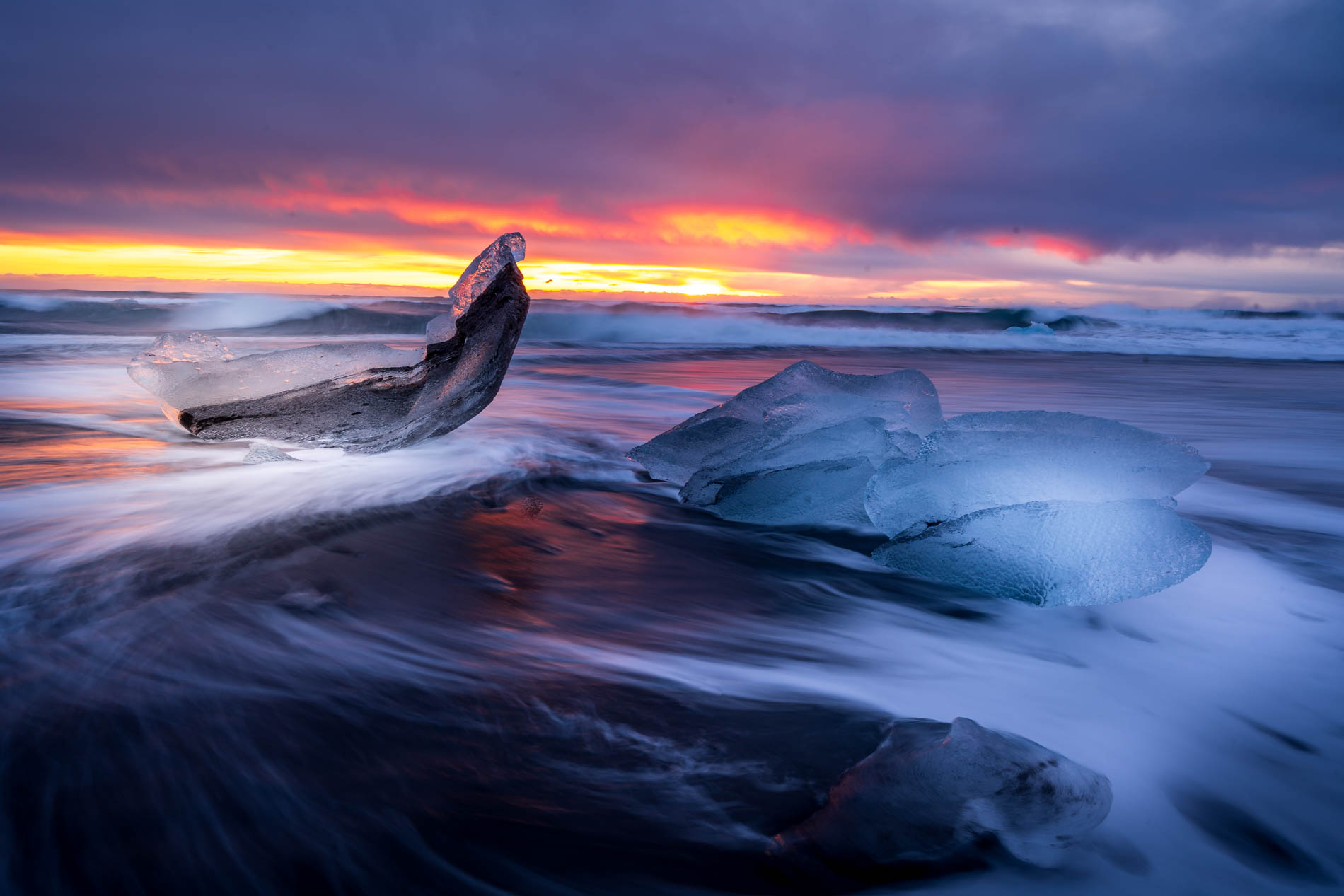
📷 Sony A7R III · 21mm · f/16 · 1s · ISO 100 (tripod)🖼️ Want this as a print, for your website, or for a campaign? License it here — ref. ICE-03
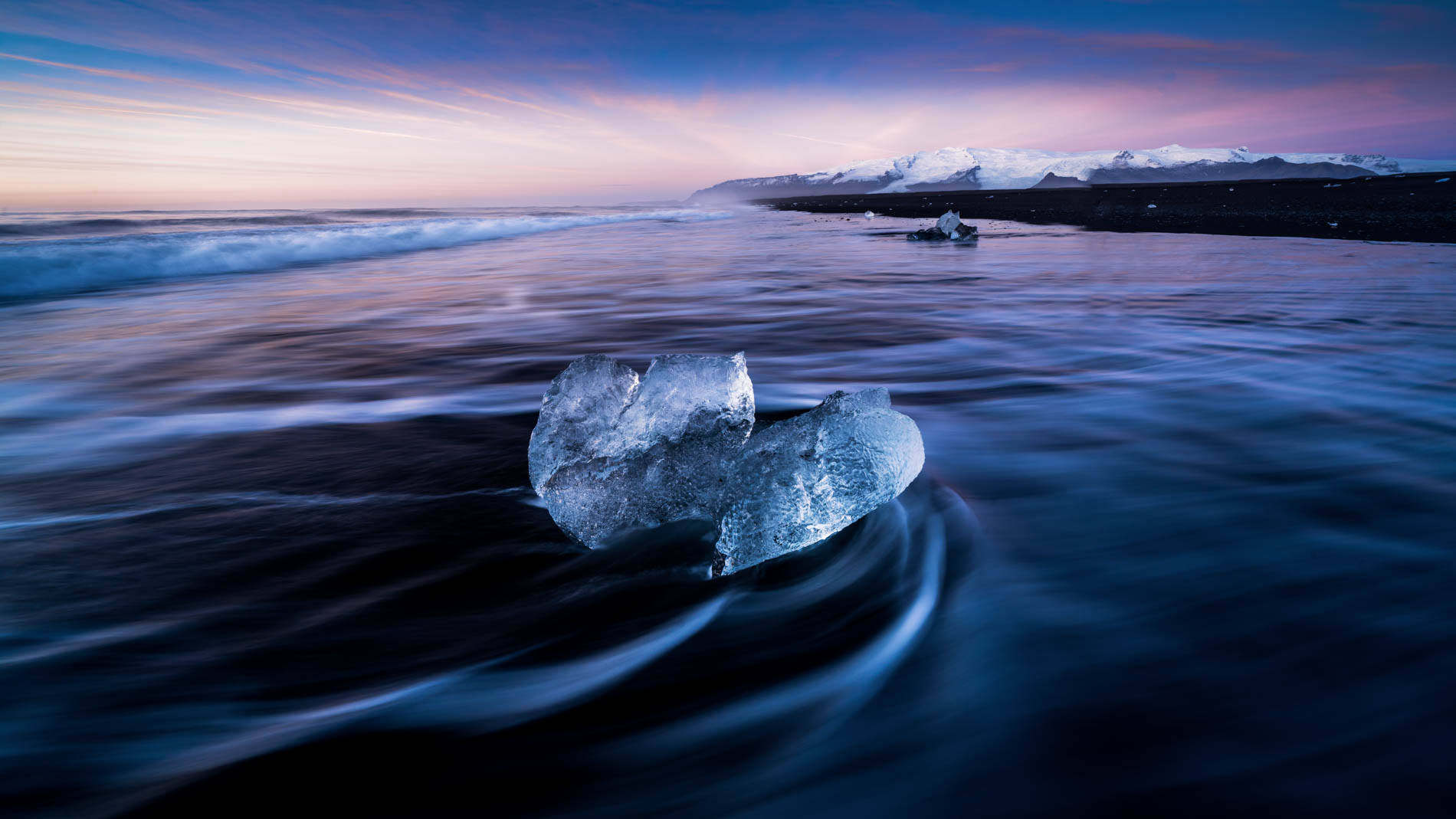 📷 Sony A7R IV · 13mm · f/14 · 0.8s · ISO 50 (tripod)🖼️ Want this as a print, for your website, or for a campaign? License it here — ref. ICE-04
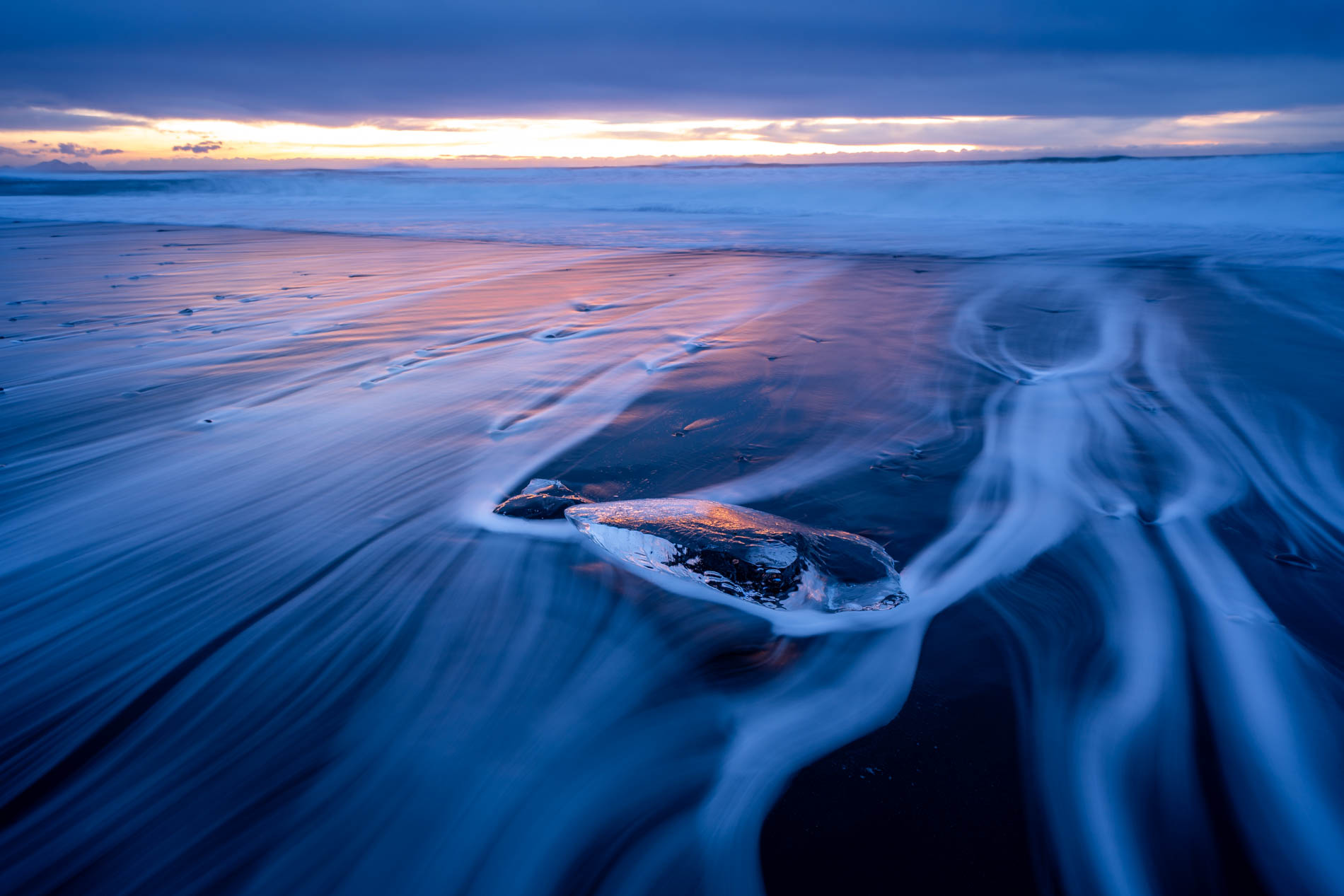 📷 Sony A7R III · 19mm · f/7.1 · 2.5s · ISO 100 (tripod)🖼️ Want this as a print, for your website, or for a campaign? License it here — ref. ICE-05
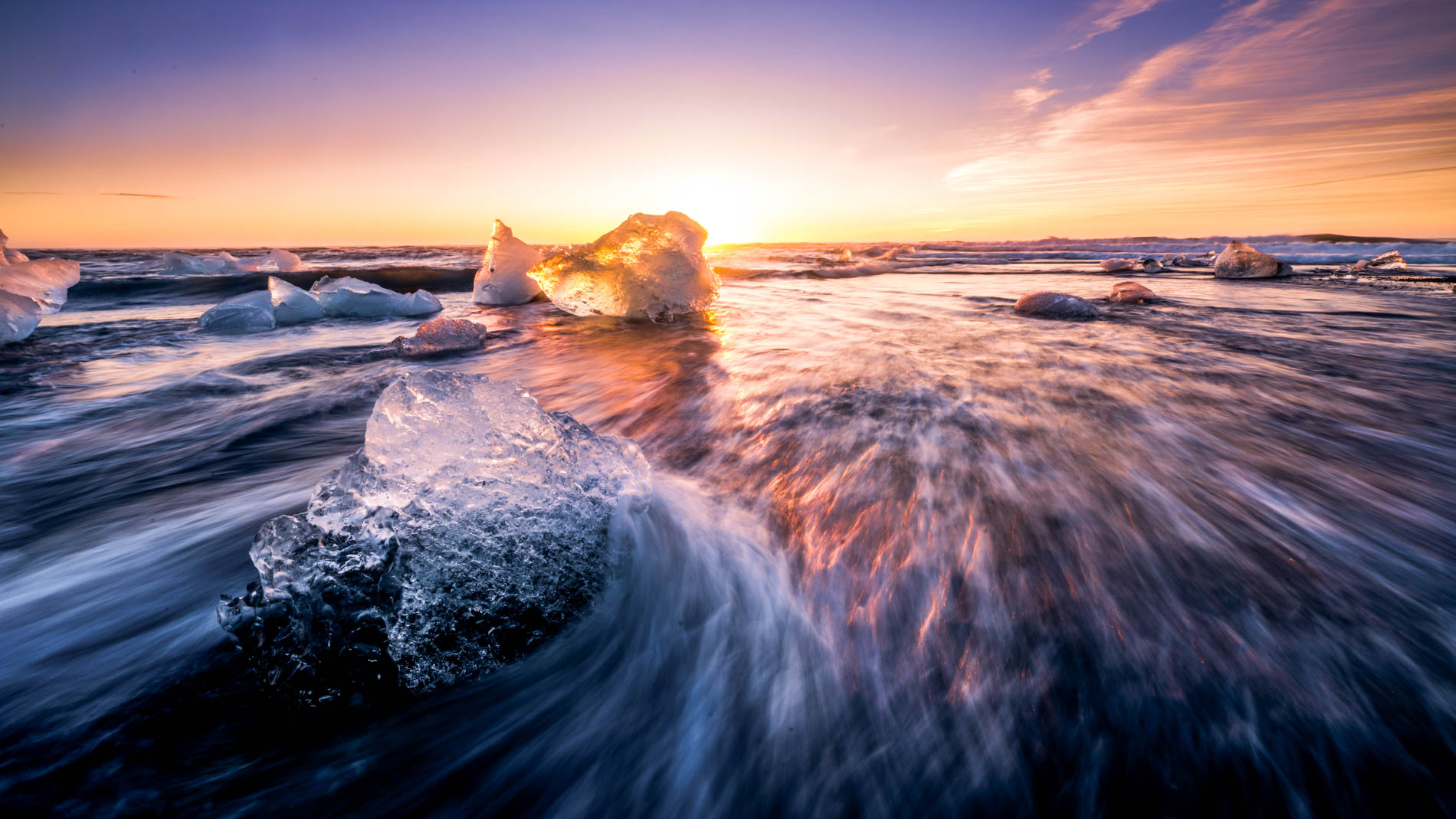 📷 Sony A7R IV · 14mm · f/22 · 0.4s · ISO 50 (tripod)🖼️ Want this as a print, for your website, or for a campaign? License it here — ref. ICE-06
4. Stokksnes & Vestrahorn
📍 Stokksnes (Vestrahorn) (64.2497, -14.9667)
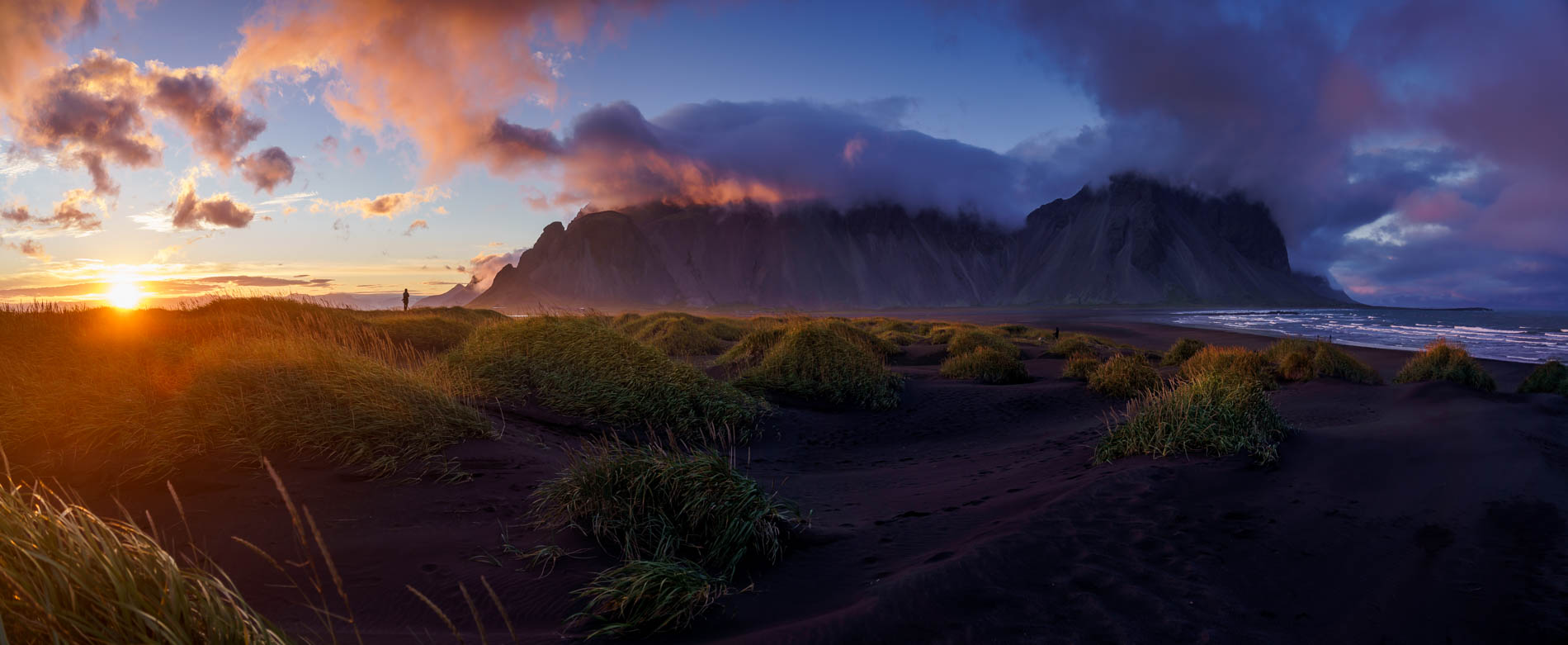
The jagged Vestrahorn rising over the black-sand beach at Stokksnes is one of the great landscapes on earth. On a calm evening the wet sand becomes a mirror; among the grassy dunes you get a softer foreground; and if you are lucky, an Icelandic horse will gallop across the beach for you.
Best time: Sunset into blue hour, on a still evening for the reflections.
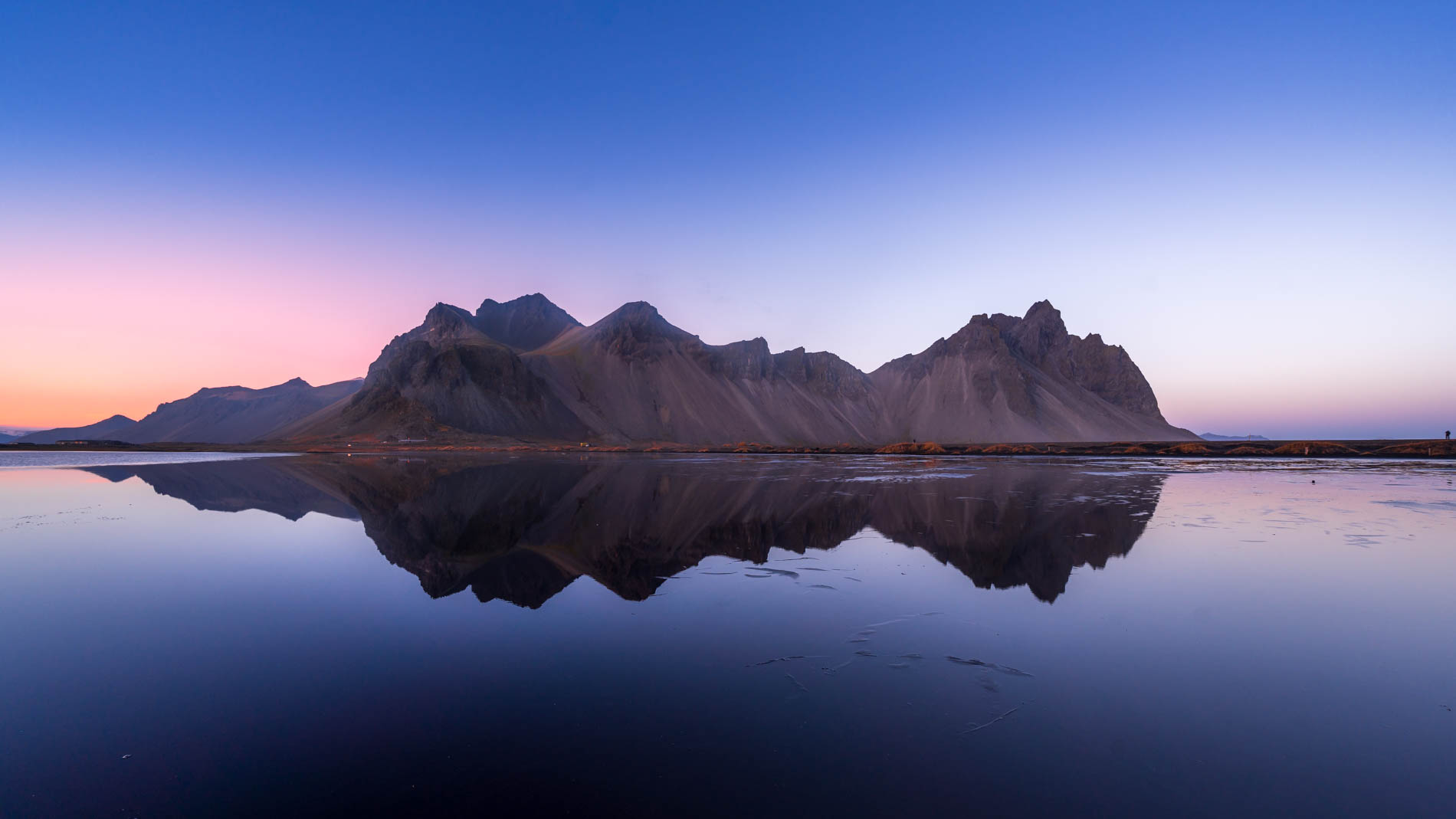
📷 Sony A7R IV · 12mm · f/7.1 · 1/40s · ISO 100🖼️ Want this as a print, for your website, or for a campaign? License it here — ref. ICE-07
 📷 Sony A7R IV · 24mm · f/4 · 1/125s · ISO 100🖼️ Want this as a print, for your website, or for a campaign? License it here — ref. ICE-08
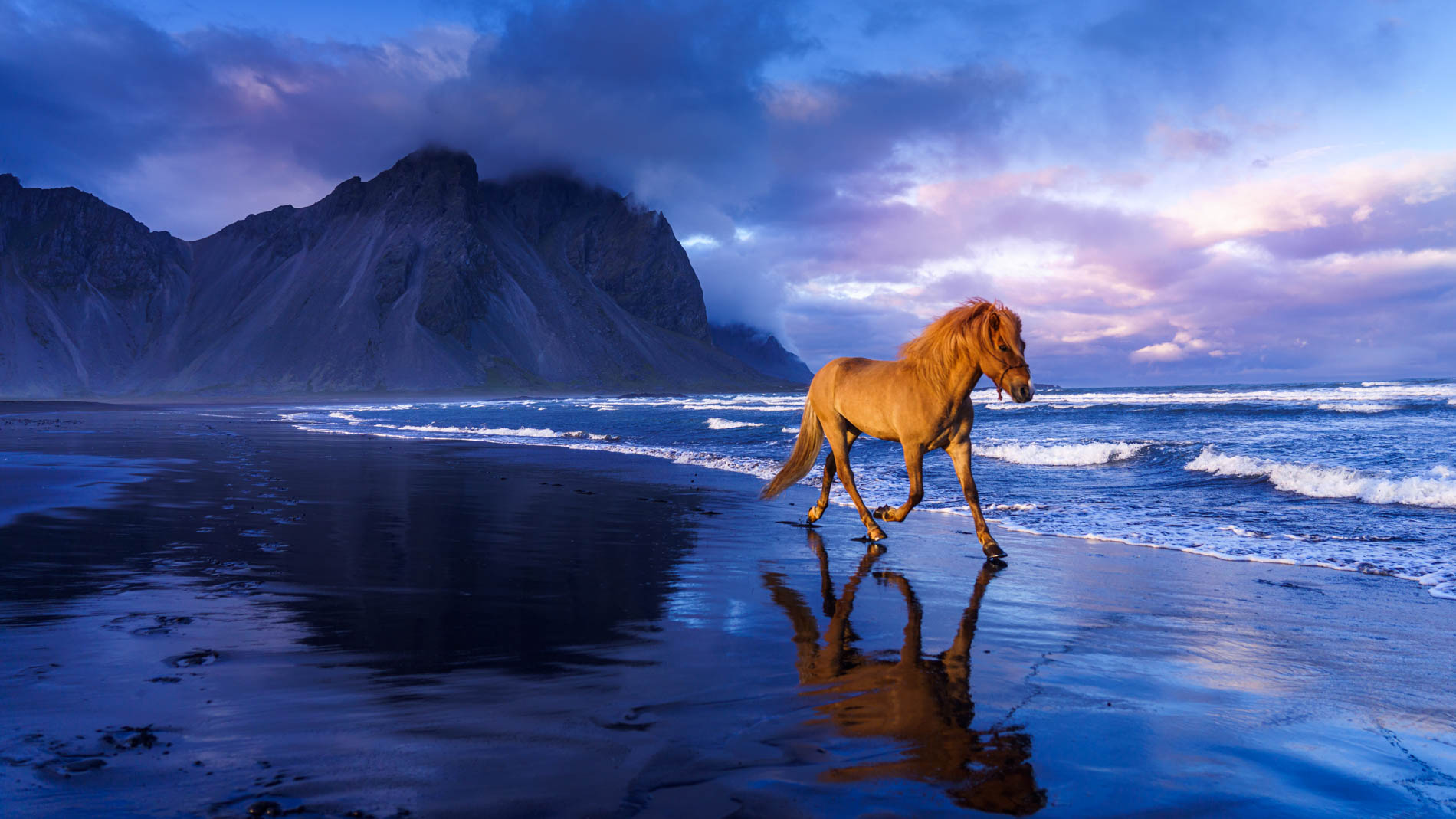 📷 Sony A7R IV · 24mm · f/4 · 1/640s · ISO 200🖼️ Want this as a print, for your website, or for a campaign? License it here — ref. ICE-09
5. The Ice Cave (Vatnajökull)
📍 Vatnajökull ice caves (from Jökulsárlón) (64.0784, -16.2306)
Beneath the Vatnajökull glacier, winter meltwater carves caves of glowing blue crystal ice. Put a person in a red jacket inside for scale and colour. These are only accessible on a guided tour in winter — book ahead, and shoot handheld at a higher ISO in the low light.
Best time: Winter (roughly November–March) on a guided tour. Bring a fast lens.
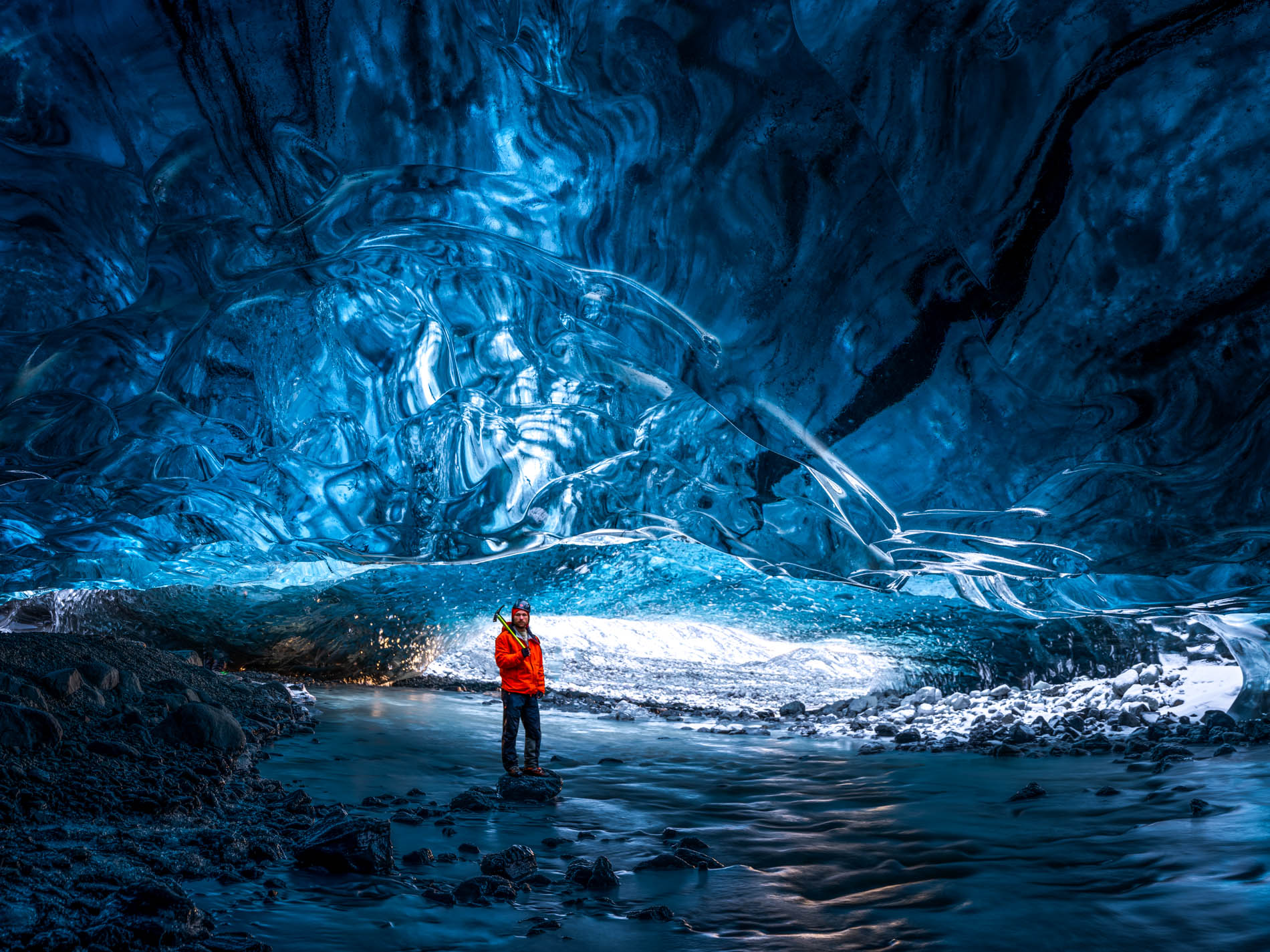
📷 Sony A7R III · 24mm · f/7.1 · 1/5s · ISO 100🖼️ Want this as a print, for your website, or for a campaign? License it here — ref. ICE-10
6. The Northern Lights
📍 Lómagnúpur (South Iceland dark sky) (63.97, -17.45)
The aurora borealis is the reason many photographers come to Iceland. Find a dramatic foreground — here, the towering peak of Lómagnúpur with a still pool for the reflection — get well away from town lights, and shoot a wide, fast lens at a high ISO. Then simply wait for the sky to dance.
Best time: Clear, dark winter nights (Sept–April), away from light pollution. Check an aurora forecast.
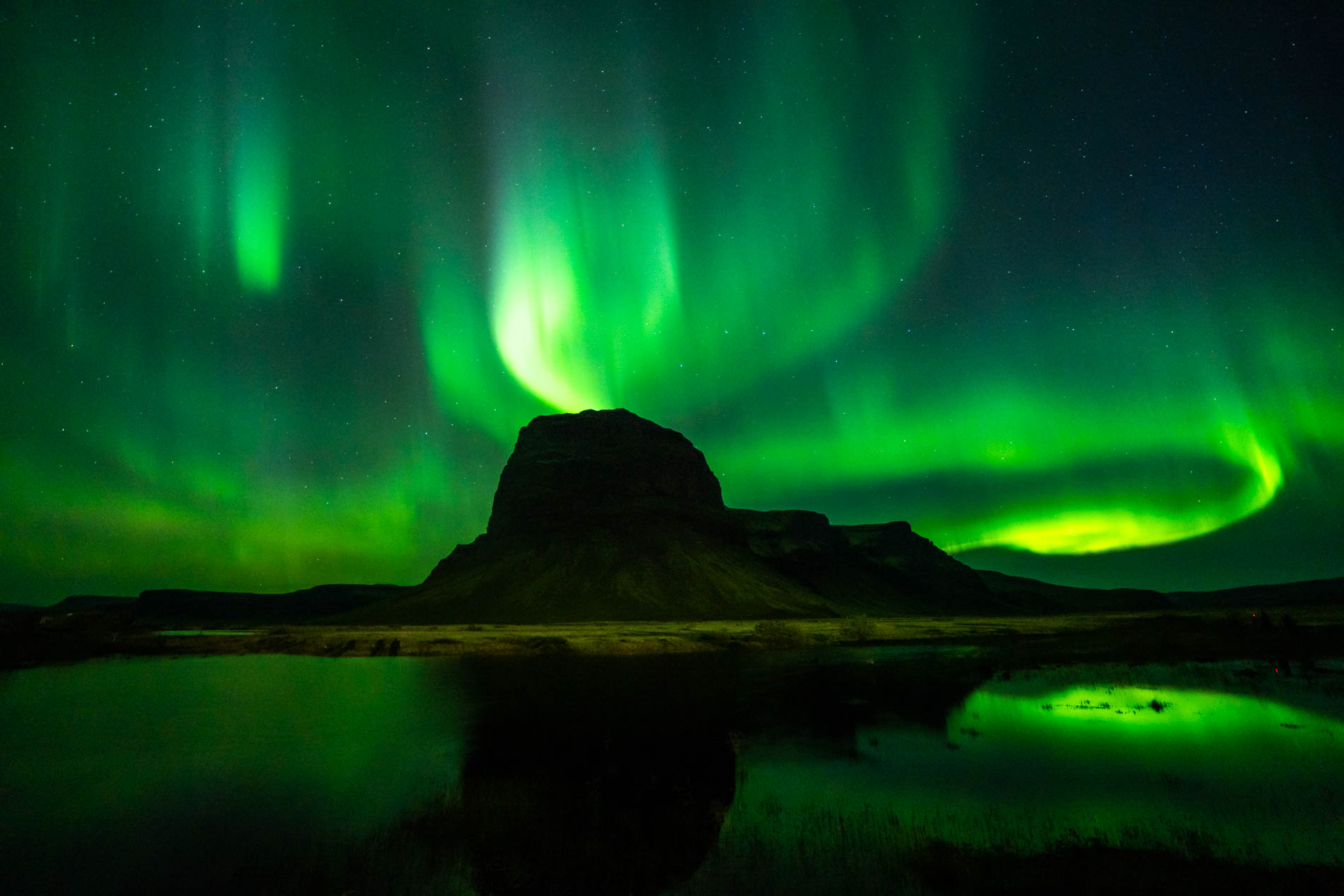
📷 Sony A7R IV · 12mm · f/4 · 4s · ISO 2500🖼️ Want this as a print, for your website, or for a campaign? License it here — ref. ICE-11
7. A Glacier Reflection (Skaftafell)
📍 Svínafellsjökull / Skaftafell (64.0167, -16.8772)
Where a glacier tongue spills out of the mountains near Skaftafell, a still meltwater pool mirrors the whole scene. Shoot it in flat, moody light and convert to black-and-white for a timeless, Ansel-Adams-style landscape. I break down that same conversion approach in my Ansel Adams Zone System guide.
Best time: Overcast daytime for soft even light; great in black-and-white.
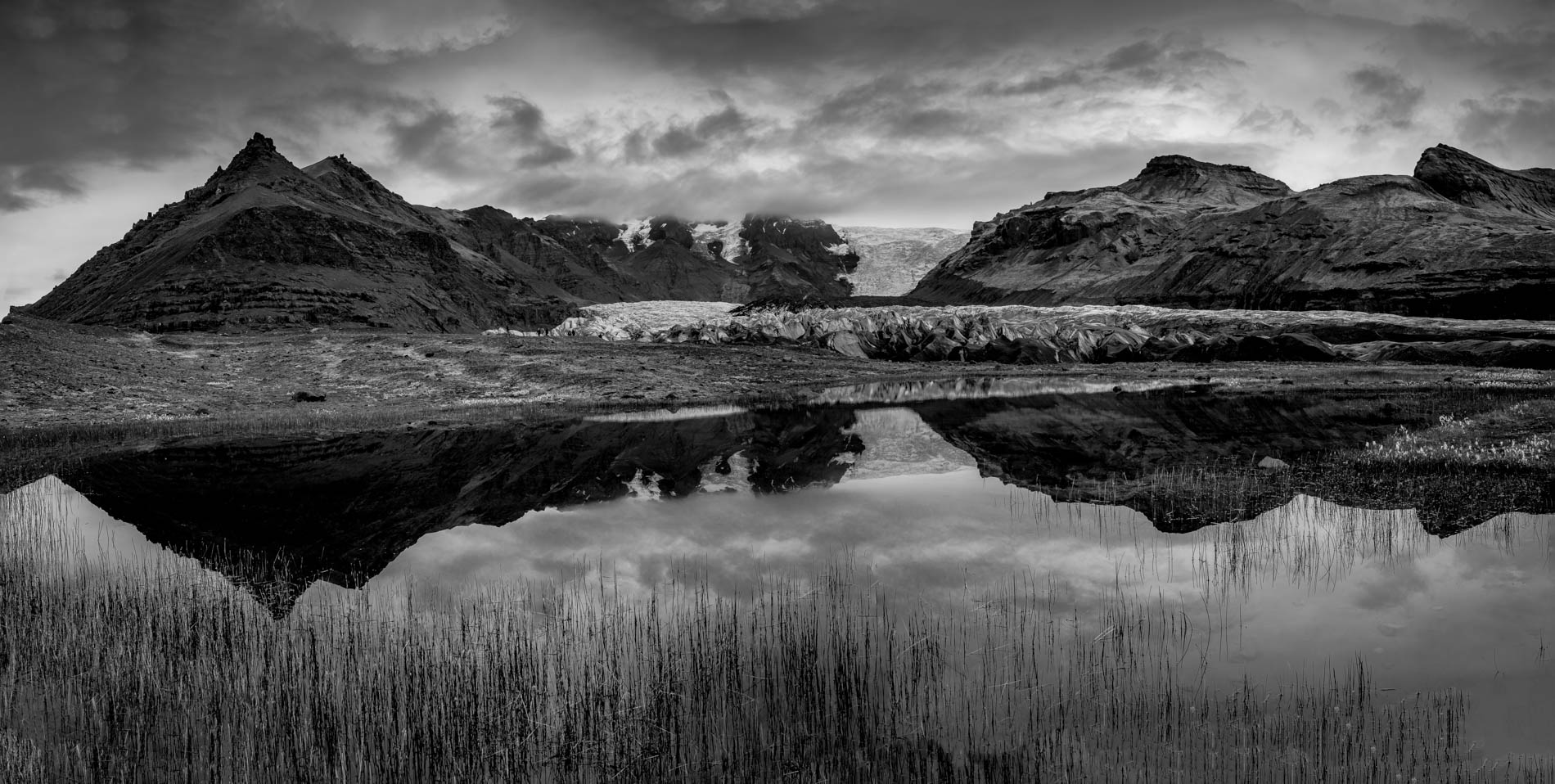
📷 Leica Q3 · 28mm · f/7.1 · 1/100s · ISO 100🖼️ Want this as a print, for your website, or for a campaign? License it here — ref. ICE-12
8. The Sun Voyager (Reykjavík)
📍 Sun Voyager (Sólfar), Reykjavík (64.1475, -21.9224)
Back in the capital, the Sun Voyager sculpture — a gleaming steel Viking longship — sits on the Reykjavík waterfront. Shoot it head-on at blue hour with the mountains and the bay behind, and a touch of warm light on the steel. For more on picking golden hour versus blue hour for a scene like this, see my golden hour vs blue hour guide.
Best time: Blue hour, for balanced light on the sculpture and the sky.
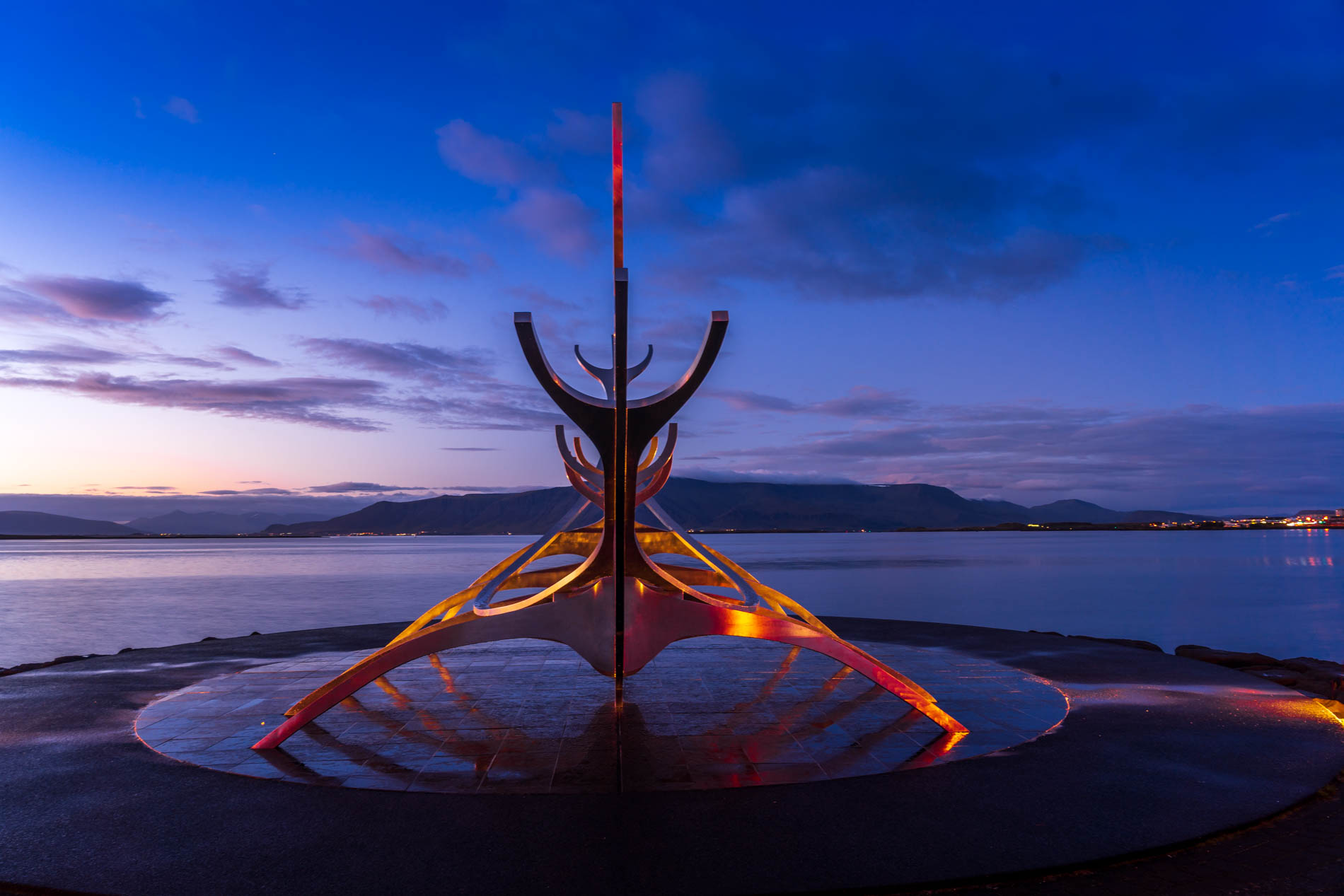
📷 Sony A7R IV · 24mm · f/9 · 3.2s · ISO 100 (tripod)🖼️ Want this as a print, for your website, or for a campaign? License it here — ref. ICE-13
9. The Highland Craters (Aerial)
📍 Fjallabak Highlands (approx.) (63.98, -18.5)
Iceland's interior highlands look like another planet from above — fields of red and black volcanic craters streaked with ash. A drone at low altitude reveals the patterns and the scale. Note these remote highland tracks are summer-only and need a 4x4.
Best time: Summer, from a drone in soft overcast light. (Remote — 4x4 and highland access required.)
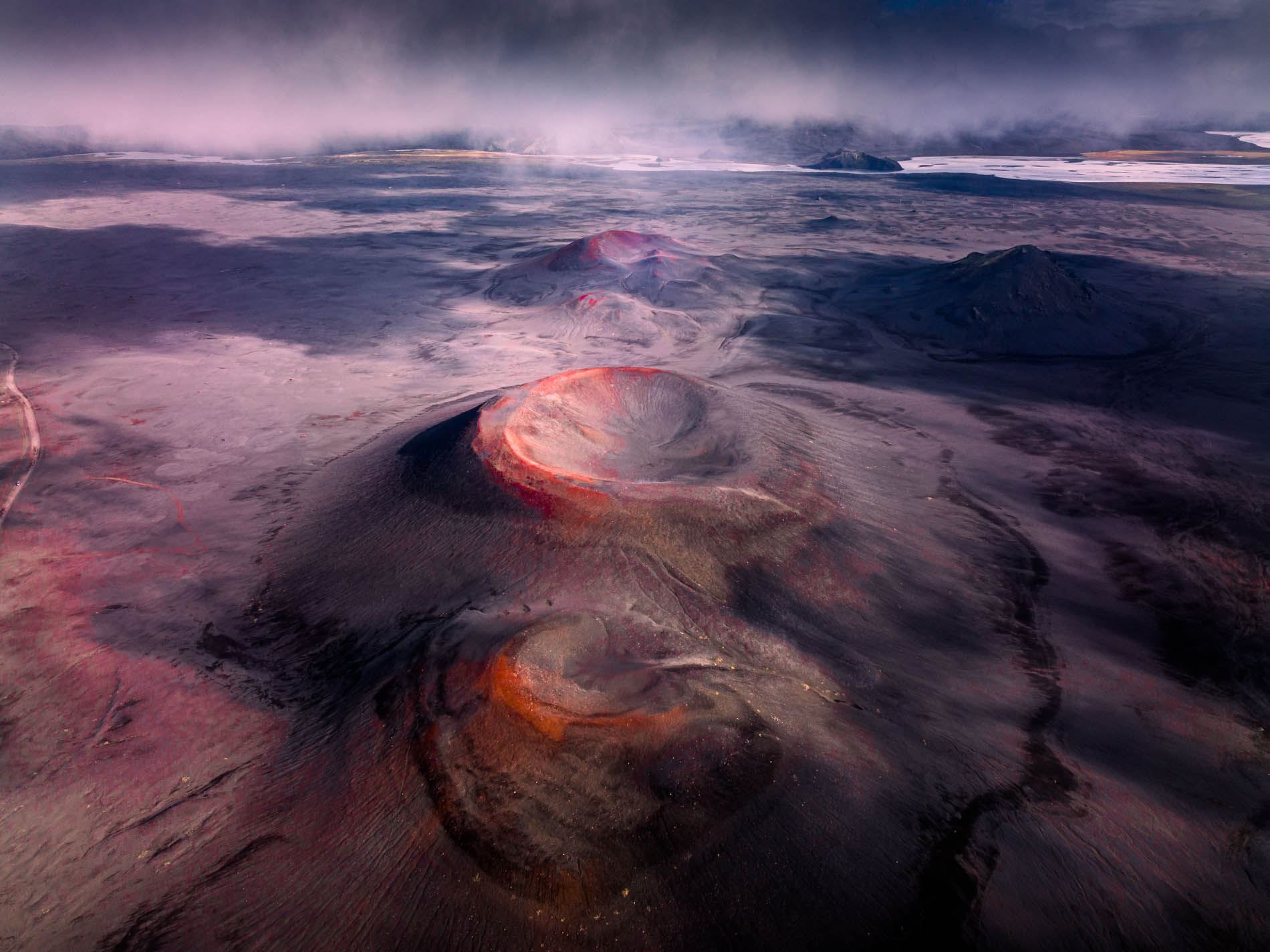
📷 DJI (L2D-20c) · 12mm · f/11 · 1/120s · ISO 100🖼️ Want this as a print, for your website, or for a campaign? License it here — ref. ICE-14
Frequently Asked Questions
When can I see the Northern Lights in Iceland?
Roughly September through April, on clear, dark nights away from town lights. Check an aurora forecast before heading out, and give yourself several nights in case of cloud cover.
Do I need a guide to visit the ice caves?
Yes. The Vatnajökull ice caves are only accessible on a guided tour, typically running November to March, since the caves themselves are unstable and change with the season.
What gear do I need for Iceland's waterfalls and beaches?
A tripod and an ND filter for the long exposures at Skógafoss, Háifoss, and Diamond Beach, plus a rain cover or lens cloth — the spray at the big waterfalls is relentless.
Explore More Photography Locations
Planning your next photo trip? Here are more of my location guides:
- The Best Photography Locations in New York City
- The Best Photography Locations in Antelope Canyon and Monument Valley
- The Best Photography Locations in Las Vegas
- The Best Photography Locations in Yosemite
- The Best Photography Locations in San Francisco
- The Best Photography Locations in London
- The Best Photography Locations in Florence & Tuscany
- The Best Photography Locations in Venice
Happy shooting! — Serge
Want more? Explore 10 Lightroom secrets to instantly improve your photos and the best photography locations in Paris. Love a shot? You can license my prints here.
Get my FREE Lightroom preset here: https://bit.ly/AIPresets
Serge — Photoserge | Coaching photographers who are serious about getting to the next level.
