
How to Train Your Eye Like a Professional Photographer
By Serge Ramelli
Ever wonder how some photographers spot incredible shots everywhere while you walk right past them? It comes down to one learnable skill: a trained eye. In this guide you'll learn how to train your photographic eye to see light, lines, color, and moments — so you find strong compositions anywhere, with any camera.
Why Professionals See Photos Everywhere
Have you ever walked through a beautiful location with another photographer and wondered why they seem to find great compositions everywhere while you struggle to see anything interesting? It can feel like professional photographers have some kind of magical gift.
They don't. What separates professionals from beginners isn't better eyesight — it's that they've trained themselves to recognize the elements that make a photograph work. The good news? This is a skill anyone can develop.
Professional photographers aren't constantly searching for subjects. They're searching for four things:
- Light
- Lines
- Colors
- Moments
Once you learn to see these elements, photography becomes much easier.
1. Learn to See Light Before You See the Subject
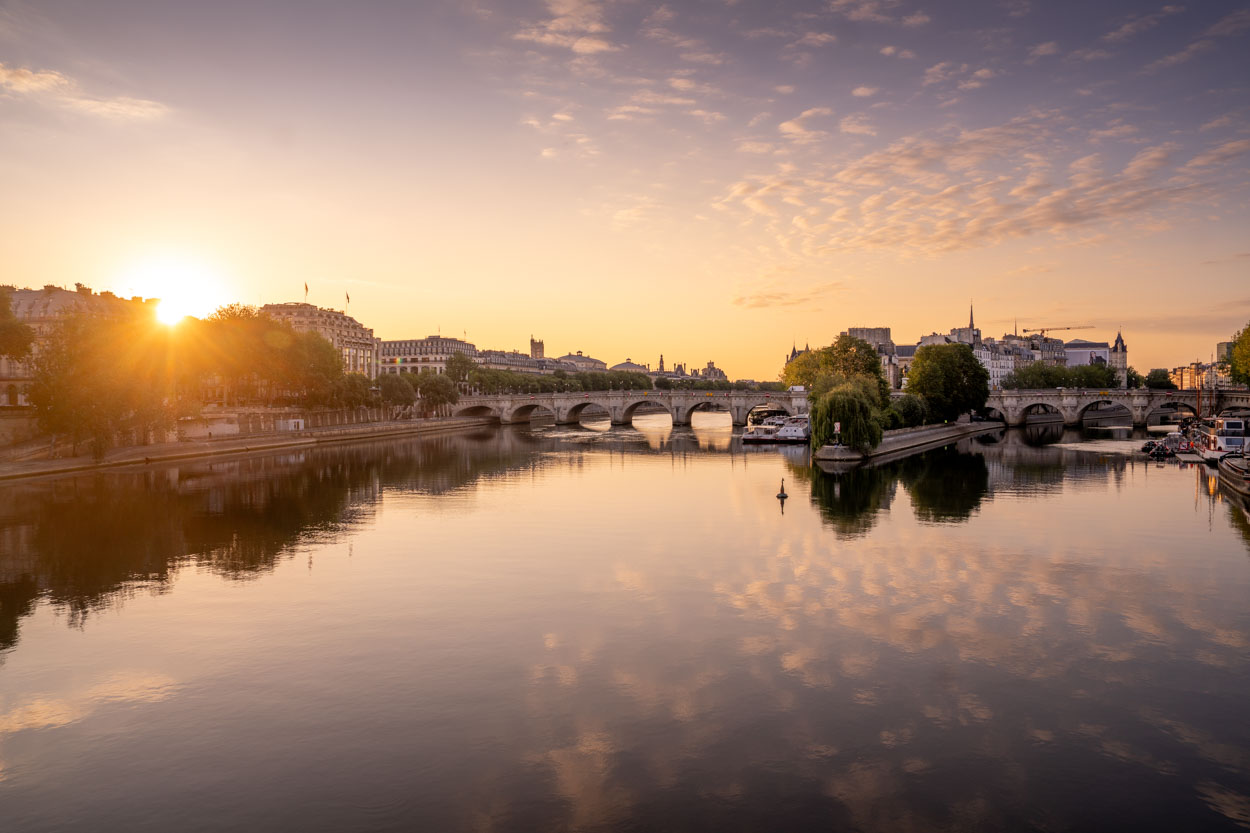
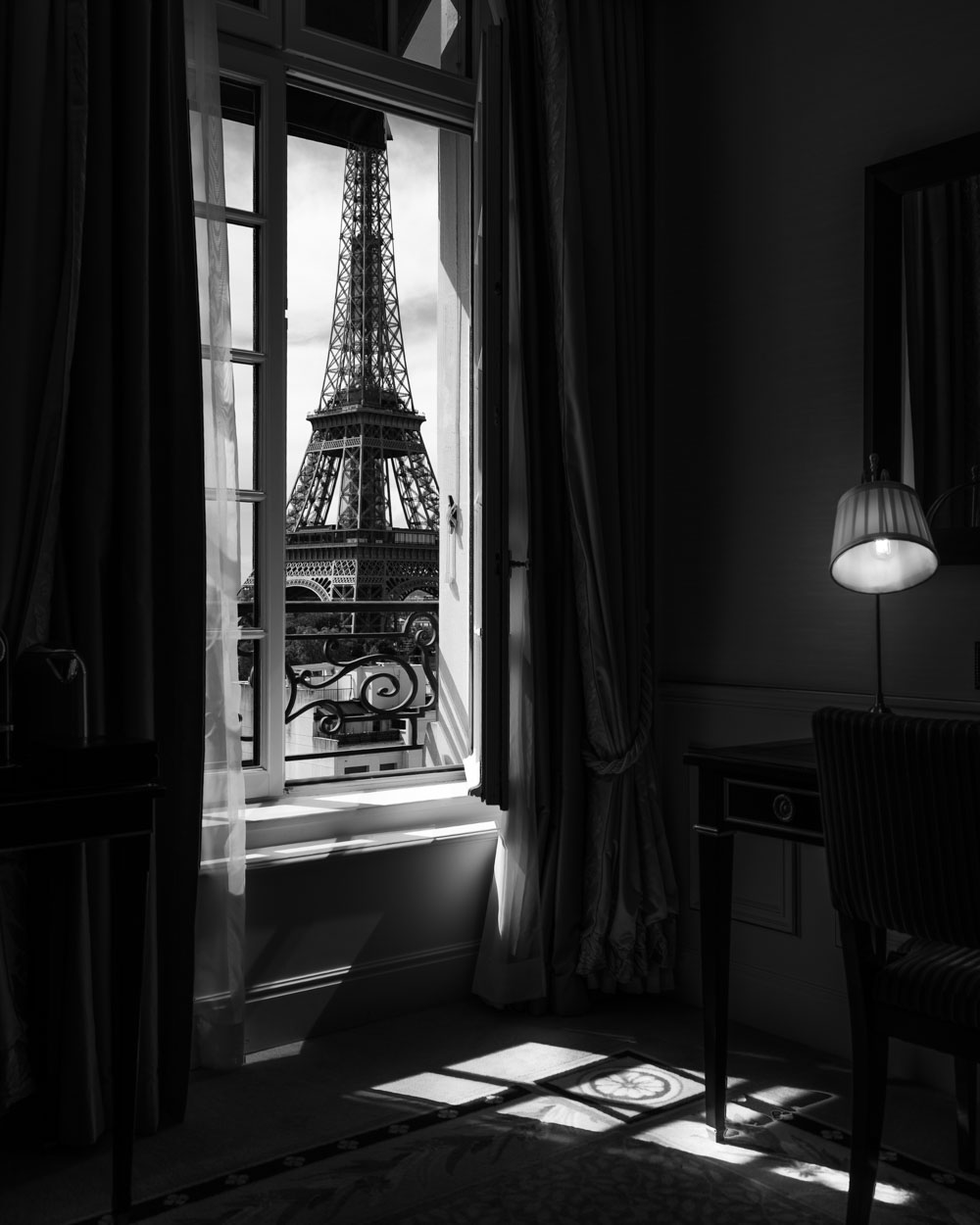
Most photographers look for subjects first. Professionals look for light. A beautiful landscape in bad light usually produces an average image; an ordinary scene in extraordinary light can become unforgettable.
The next time you're outside, stop looking for landmarks. Instead, ask yourself:
- Where is the light coming from?
- Is it soft or harsh?
- Is it creating interesting shadows?
- Is it helping tell a story?
One of the fastest ways to improve is to spend more time observing light and less time pressing the shutter. Photography literally means "writing with light." Light is the language; everything else is secondary.
Ready to get 1 on 1 support to master your tools and take photos that have that WOW factor? Apply to become a certified Master of Photography here.
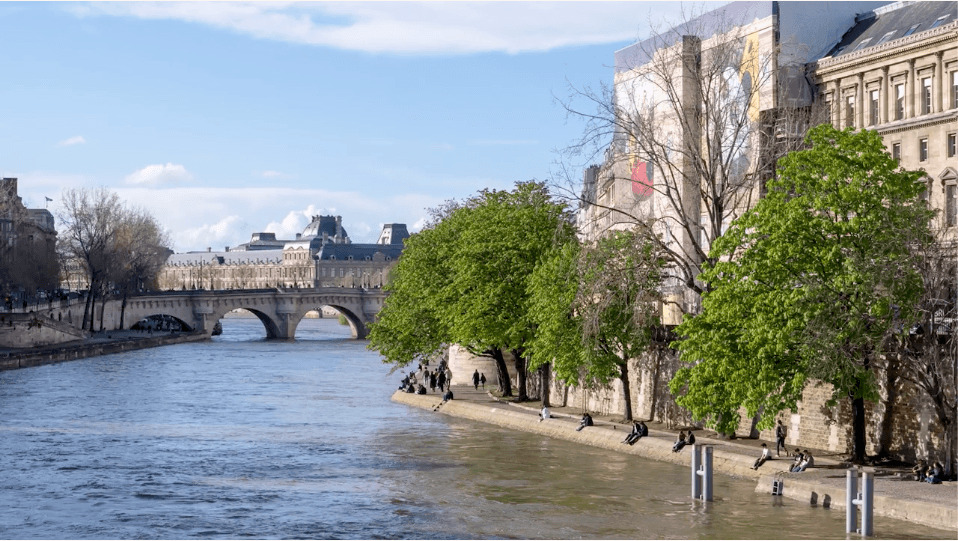
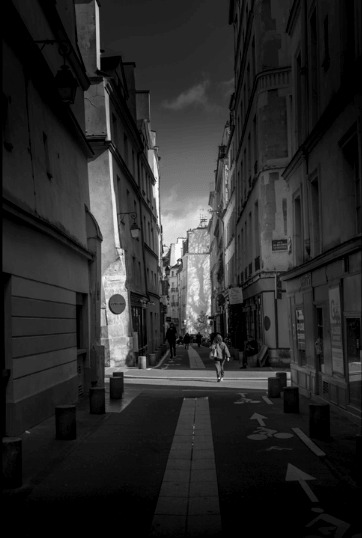
Before: The location is beautiful, but the light is flat and the moment lacks emotion.
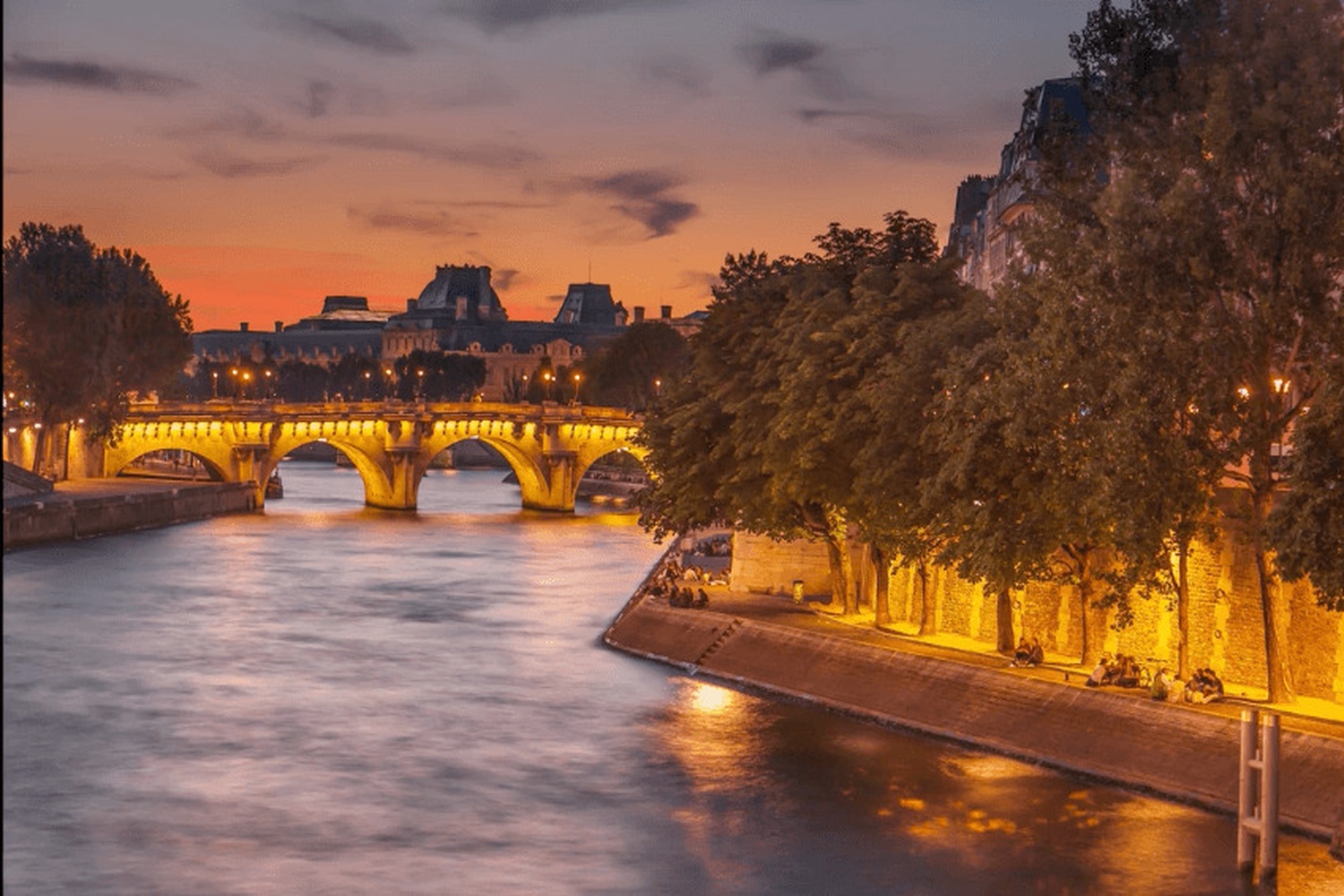
After: Same location, different conditions. Great light and perfect timing transform an ordinary scene into a compelling photograph.
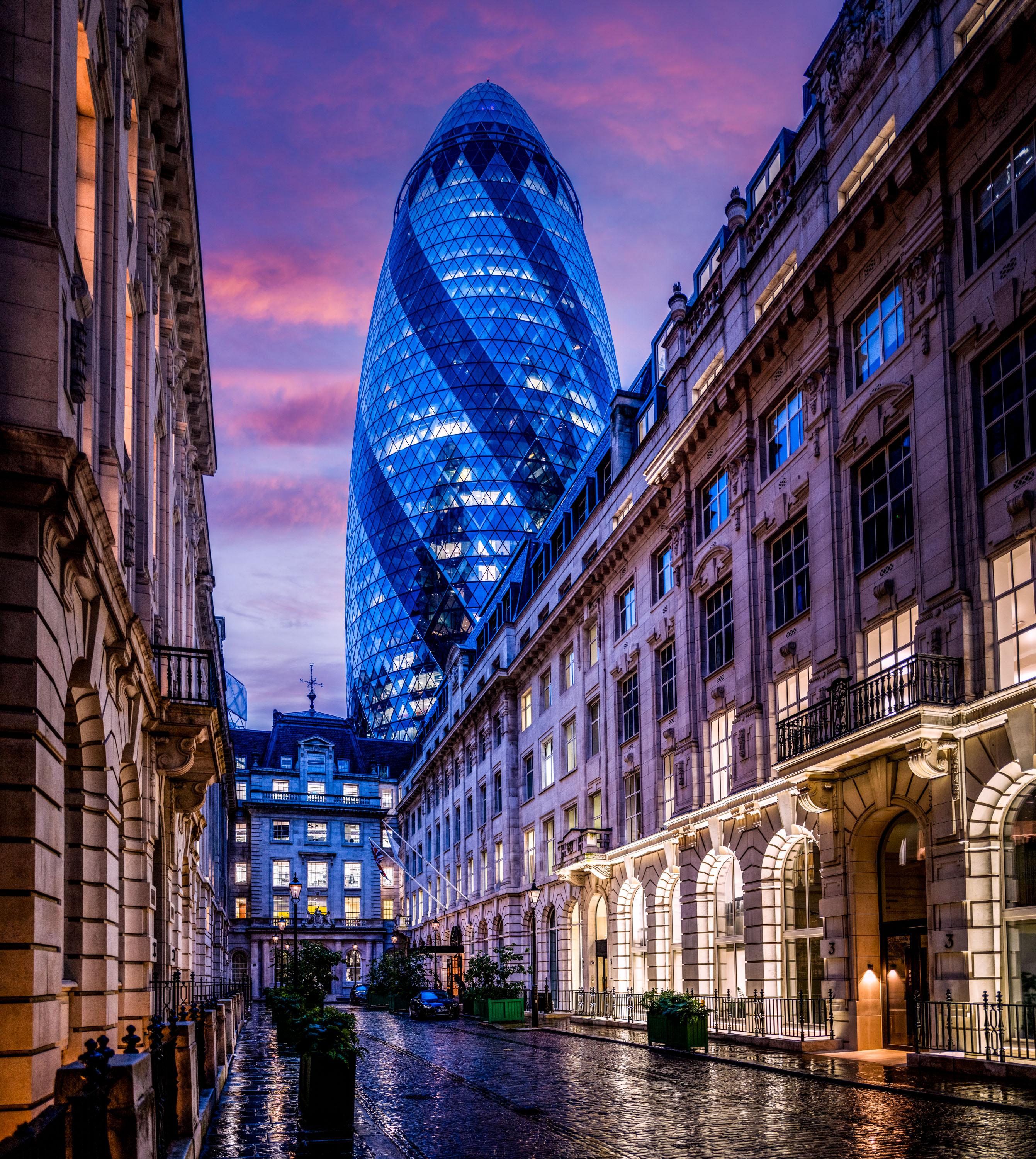
2. Train Yourself to Notice Leading Lines
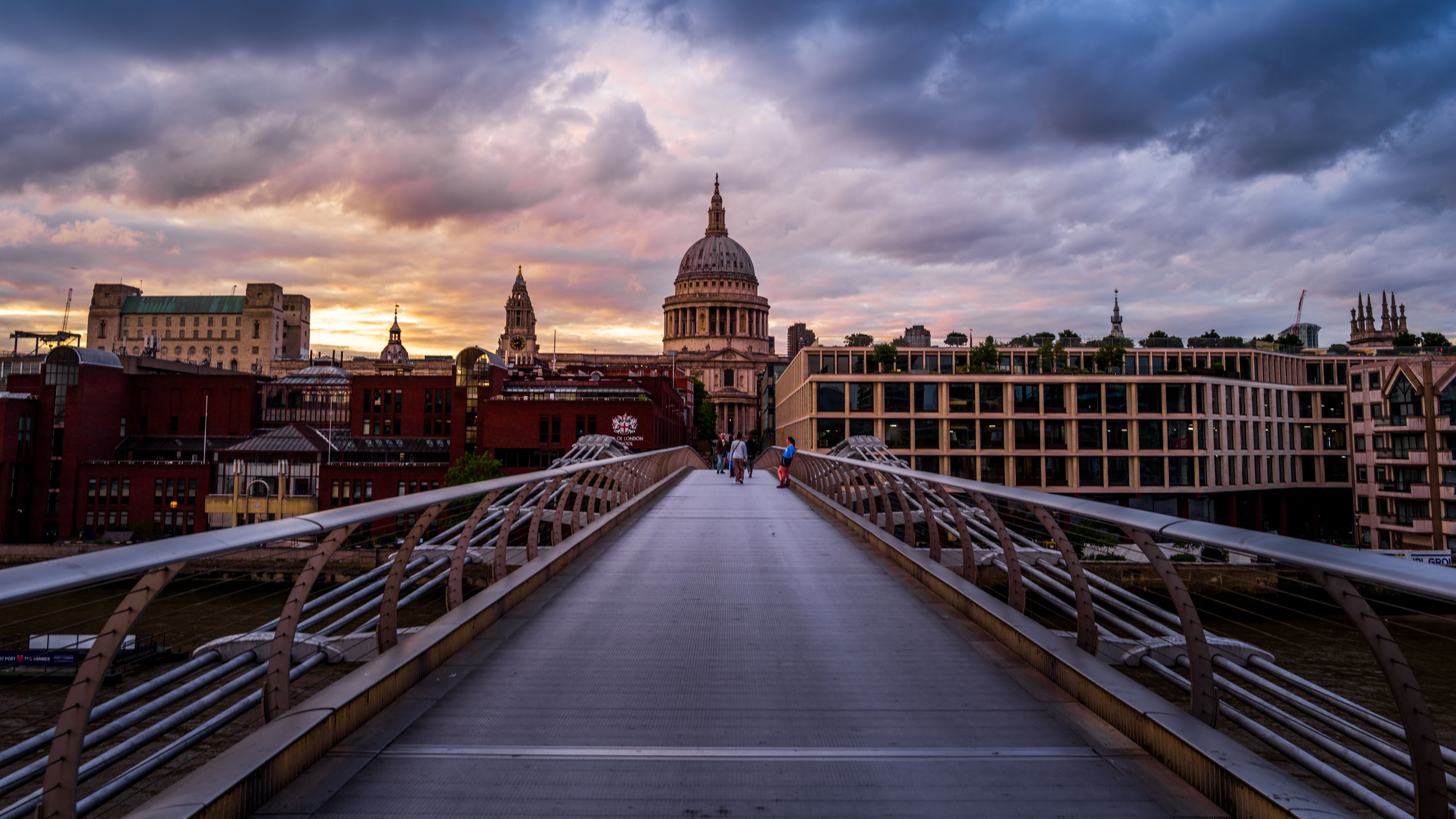
Our eyes naturally follow lines. Roads, fences, rivers, sidewalks, bridges, railings, and even shadows can guide viewers through a photograph. Professionals constantly scan a scene for these visual pathways.
Before taking a photo, ask:
- Where will the viewer's eye enter the frame?
- Where will it travel?
- What is the final destination?
Strong lines create structure — they turn a snapshot into a composition. Once you start looking for them, you'll see leading lines everywhere.
3. Pay Attention to Color Relationships
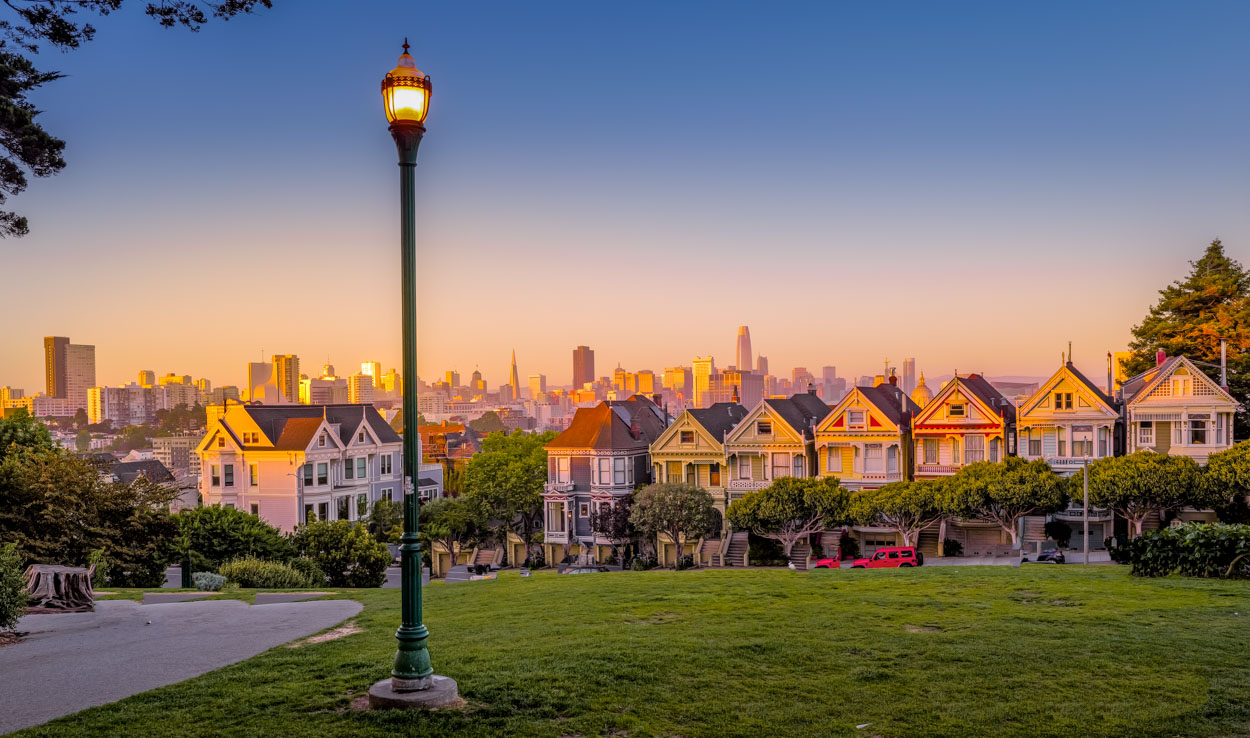
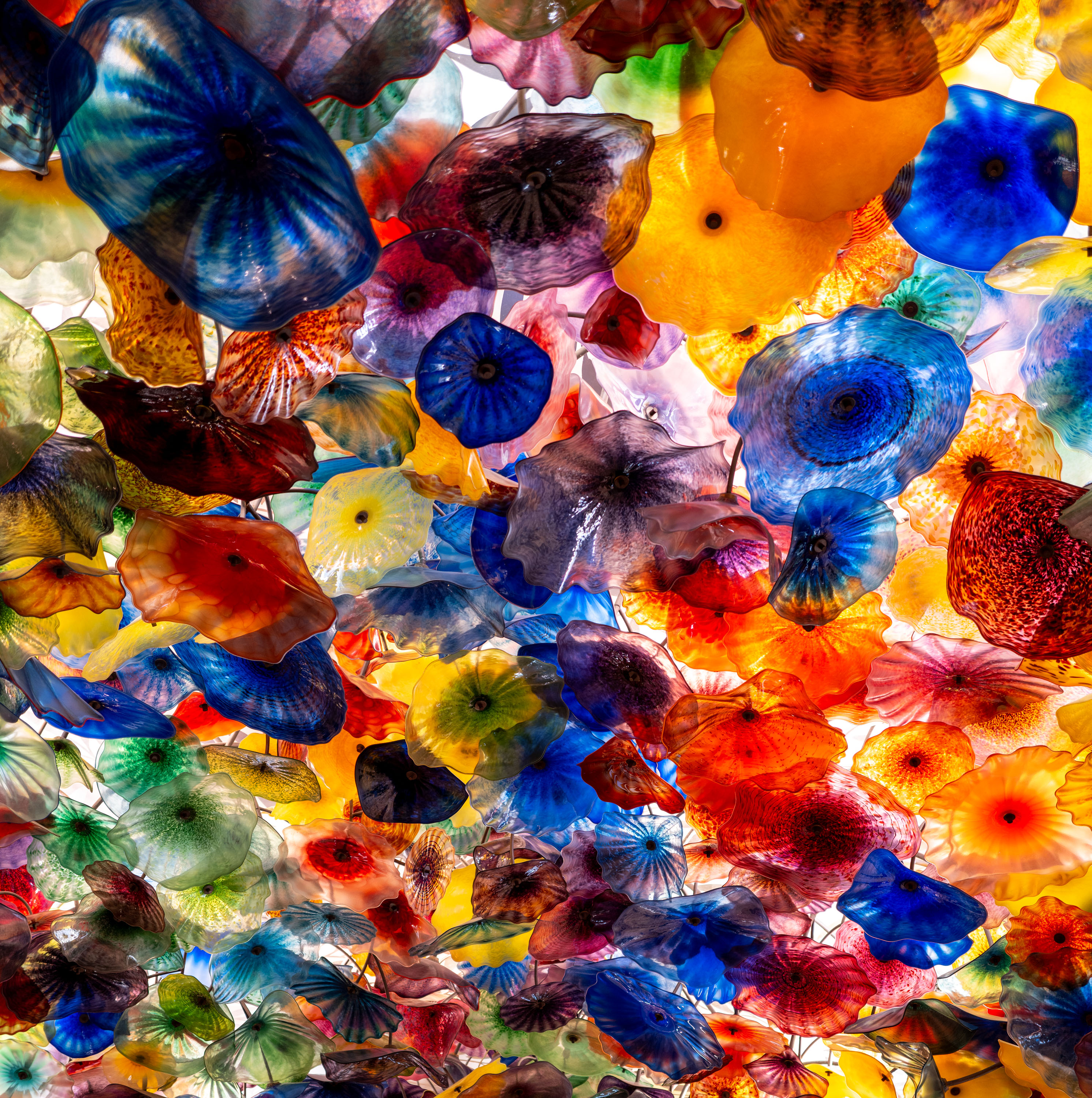
Color is one of the most powerful tools in photography, yet many photographers barely think about it. Professionals notice how colors interact. They look for:
- Complementary colors
- Color contrast
- Repeating color patterns
- Color harmony
A bright red umbrella in a gray city. A yellow taxi against a blue background. Golden sunlight illuminating cool shadows. These relationships instantly create visual impact. Instead of asking "What am I photographing?", try asking "What colors am I photographing?" — the answer may completely change your composition.
Ready to get 1 on 1 support to master your tools and take photos that have that WOW factor? Apply to become a certified Master of Photography here.
4. Learn to Anticipate Moments
This is where photography becomes storytelling. Many beginners react to moments after they happen; professionals anticipate them. They observe people, study movement, and predict behavior.
When photographing a street scene, don't simply wait for something interesting — ask yourself:
- Who is moving through the frame?
- Where are they going?
- What might happen next?
The more you practice anticipation, the more decisive moments you'll capture. Great photography often happens a fraction of a second before everyone else notices.
5. Slow Down and Observe
One of the biggest mistakes photographers make is moving too quickly. They arrive and immediately start shooting. Professionals often do the opposite: they walk, observe, study the scene, watch how the light changes, and explore multiple angles.
Many of my favorite images happened after twenty or thirty minutes of simply looking before taking a single photograph. Photography rewards patience — the longer you observe, the more opportunities you discover.
Ready to get 1 on 1 support to master your tools and take photos that have that WOW factor? Apply to become a certified Master of Photography here.
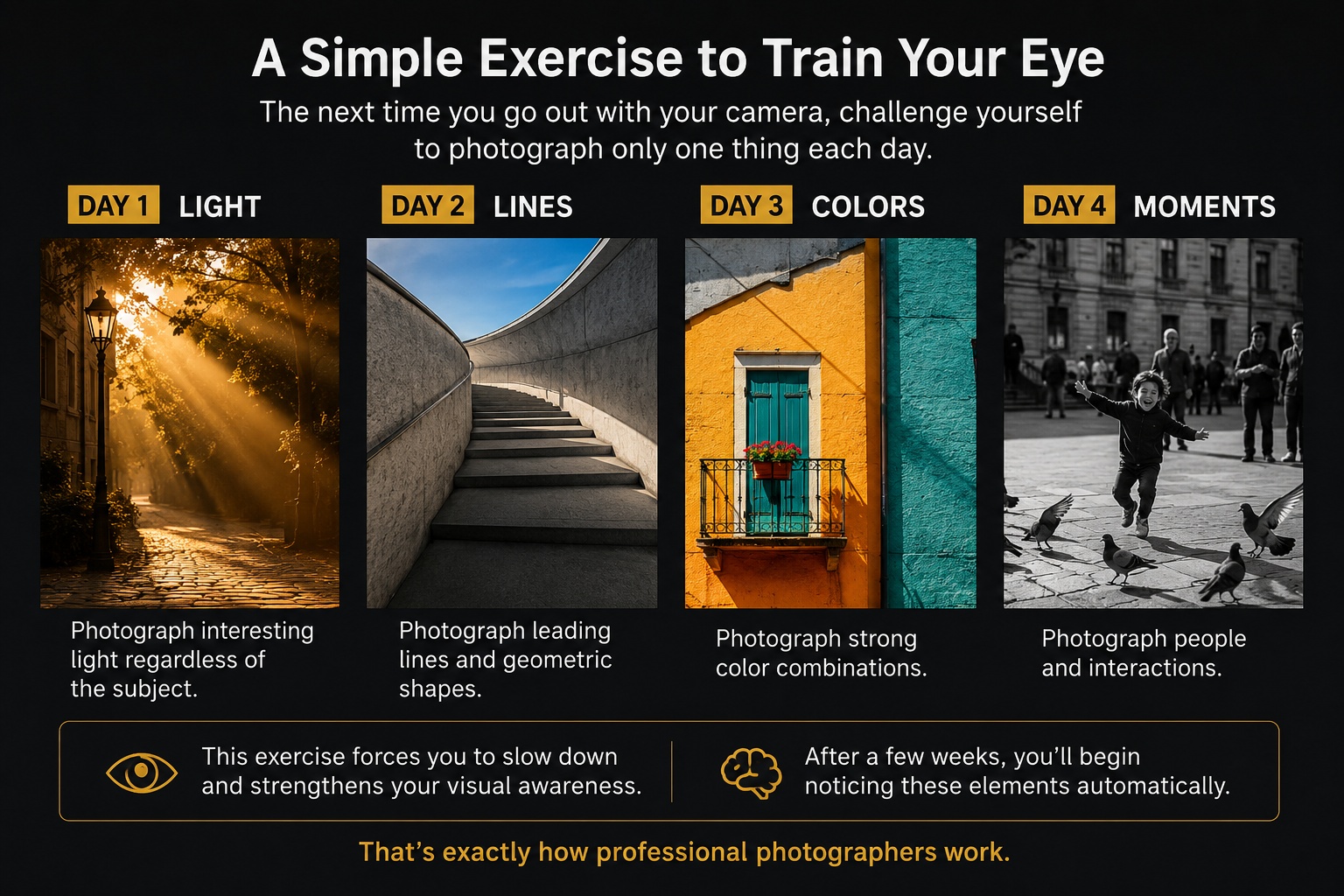
A Simple Exercise to Train Your Photographic Eye
The next time you go out with your camera, challenge yourself to photograph only one thing:
Day 1: Light
Photograph interesting light regardless of the subject.
Day 2: Lines
Photograph leading lines and geometric shapes.
Day 3: Colors
Photograph strong color combinations.
Day 4: Moments
Photograph people and interactions.
This exercise forces you to slow down and strengthens your visual awareness. After a few weeks, you'll begin noticing these elements automatically — exactly how professional photographers work.
Ready to get 1 on 1 support to master your tools and take photos that have that WOW factor? Apply to become a certified Master of Photography here.
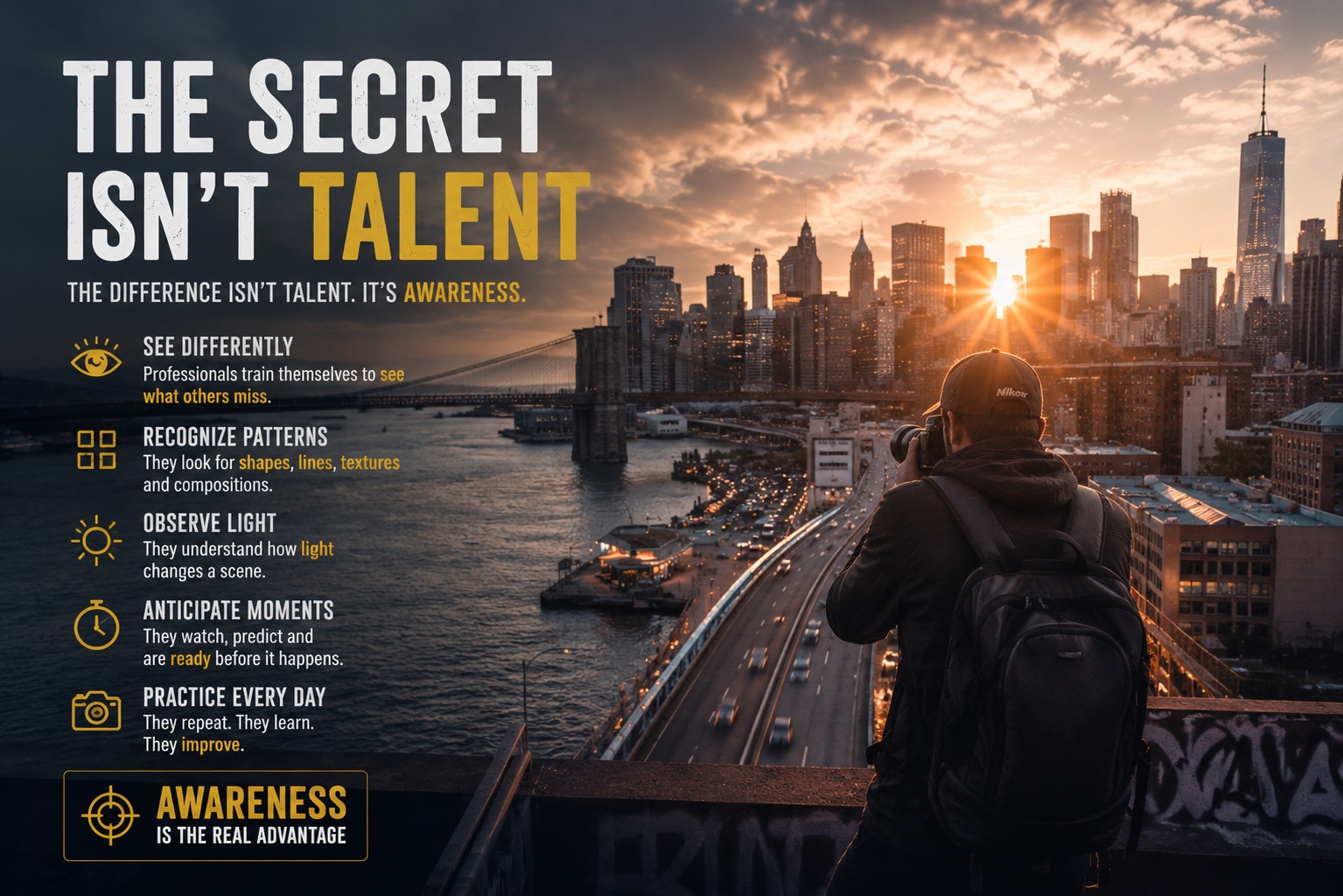
The Secret Isn't Talent
Many photographers believe professionals simply have a natural gift. In reality, most spent years training themselves to see differently — recognizing patterns, observing light, and anticipating moments every time they picked up a camera. The difference isn't talent. It's awareness.
Final Thoughts
If you want to improve your photography, stop worrying so much about camera settings and focus on training your eye. Learn to see:
- Better light
- Stronger lines
- Powerful color relationships
- Meaningful moments
These are the building blocks behind almost every memorable photograph. The camera only records what you see — the real challenge is learning how to see.
Want to go further? Read why most photographers never improve, and these 10 composition tips before your next trip.
Frequently Asked Questions
What is a photographic eye?
A photographic eye is the trained ability to spot the light, lines, color, and moments that make a strong photo. It's a skill, not a natural gift.
How do you develop an eye for photography?
Practice seeing one element at a time — light, then lines, then color, then moments — slow down before you shoot, and study why images work.
Can you train yourself to see like a photographer?
Yes. It's completely learnable. A few weeks of focused, deliberate practice and you'll start noticing these elements automatically.
How long does it take to develop a photographic eye?
Most people see a real difference within a few weeks of daily practice with the light/lines/color/moments exercise.
Want more? Explore 10 Lightroom secrets to instantly improve your photos and the best photography locations in Paris. Love a shot? You can license my prints here.
Get my FREE Lightroom preset here: https://bit.ly/AIPresets
Serge — Photoserge | Coaching photographers who are serious about getting to the next level.
