
How to Use Foreground Elements to Create Depth in Your Photos
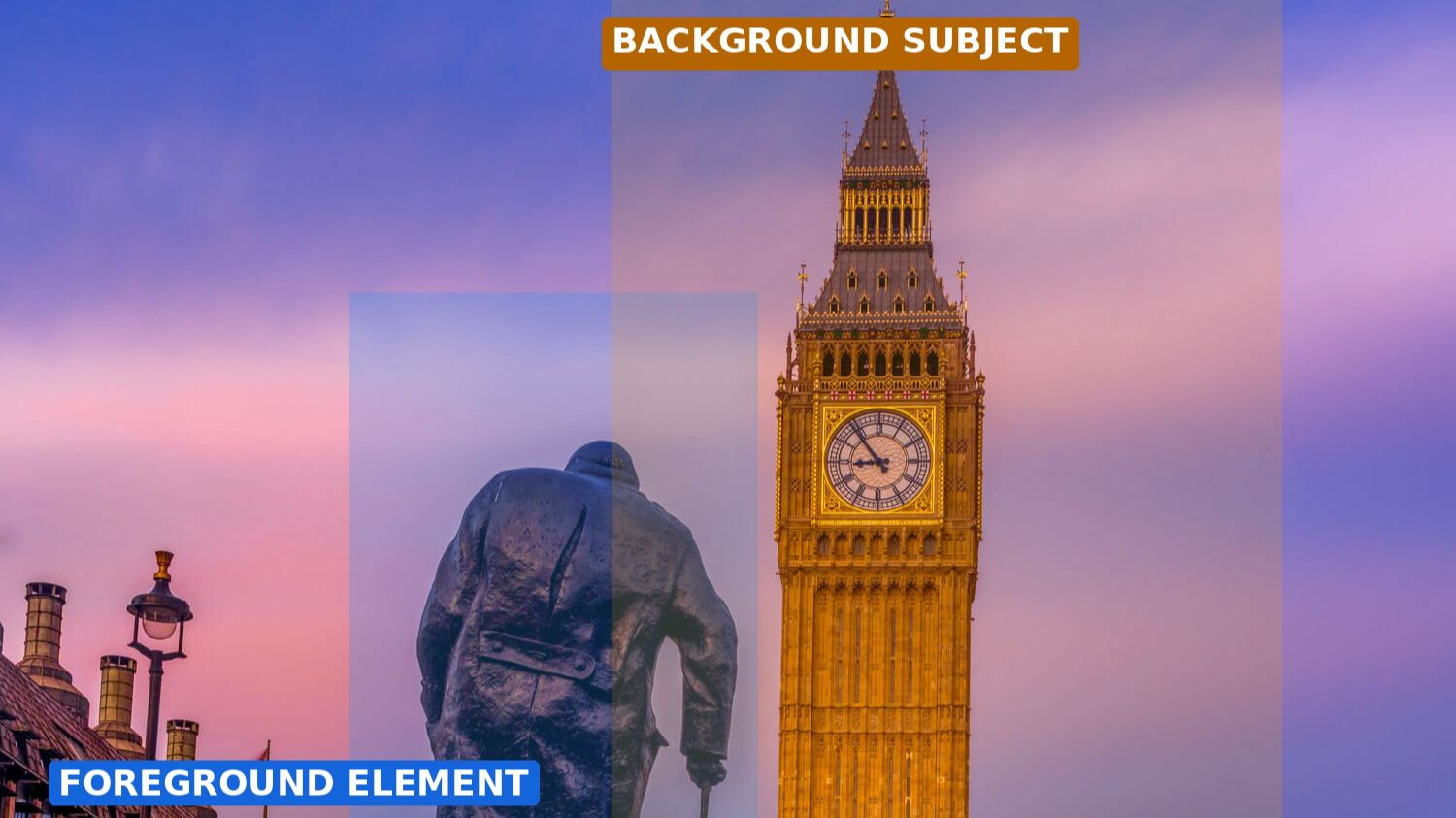
By Serge Ramelli-
Ever wonder why some travel photos look flat and forgettable while others pull you right into the scene? The secret often comes down to one simple technique: using a foreground element. In this guide, you'll learn what foreground elements are, why they work, and how to use them to instantly elevate your photography — whether you shoot landscapes, cityscapes, or street scenes.
What Is a Foreground Element?
A foreground element is any object placed in the front portion of your frame — close to the camera — that adds depth, context, or visual interest to the scene behind it. It acts as a visual entry point that guides the viewer's eye from the front of the image all the way to the background.
Think of it as building a story in three layers: foreground, midground, and background. Without a foreground, your photo has only two layers, and the result often feels flat.
Ready to get 1 on 1 support to master your tools and take photos that have that WOW factor? Apply to become a certified Master of Photography here.
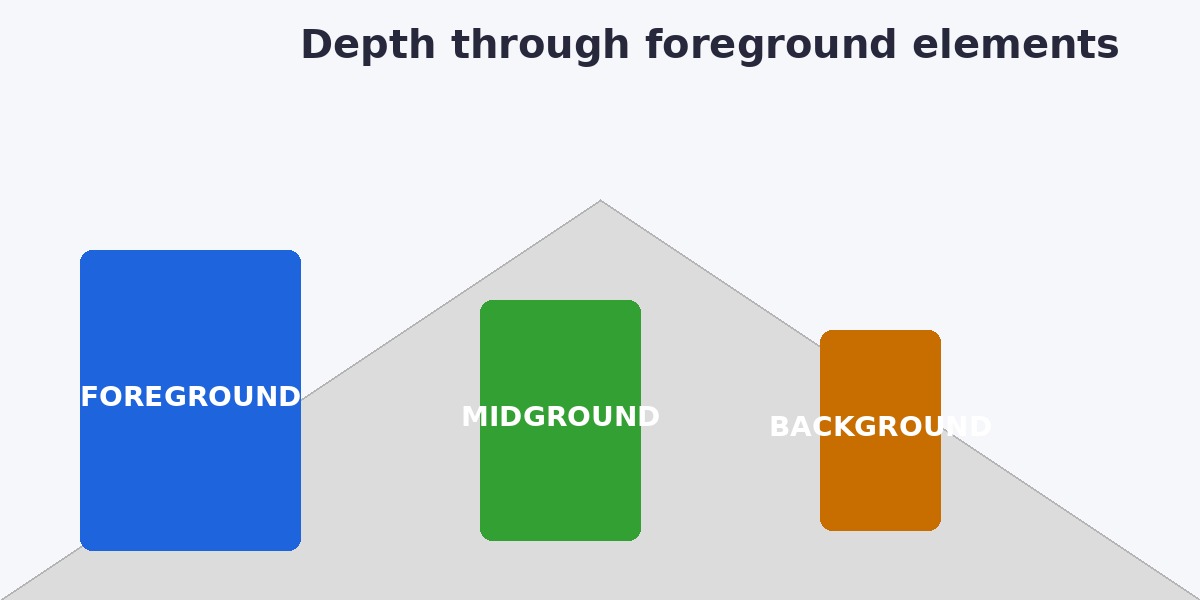
Why Foreground Elements Work
Our brains are wired to perceive depth in scenes where objects vary in size and distance. When you place a strong element in the foreground, you're giving the viewer a sense of scale and spatial relationship. The result is a photo that feels three-dimensional, immersive, and emotionally engaging.
Foreground elements also serve a compositional purpose: they fill what might otherwise be empty, dead space at the bottom of the frame — a common problem in landscape and cityscape photography.
Classic Examples of Foreground Elements
Architectural elements
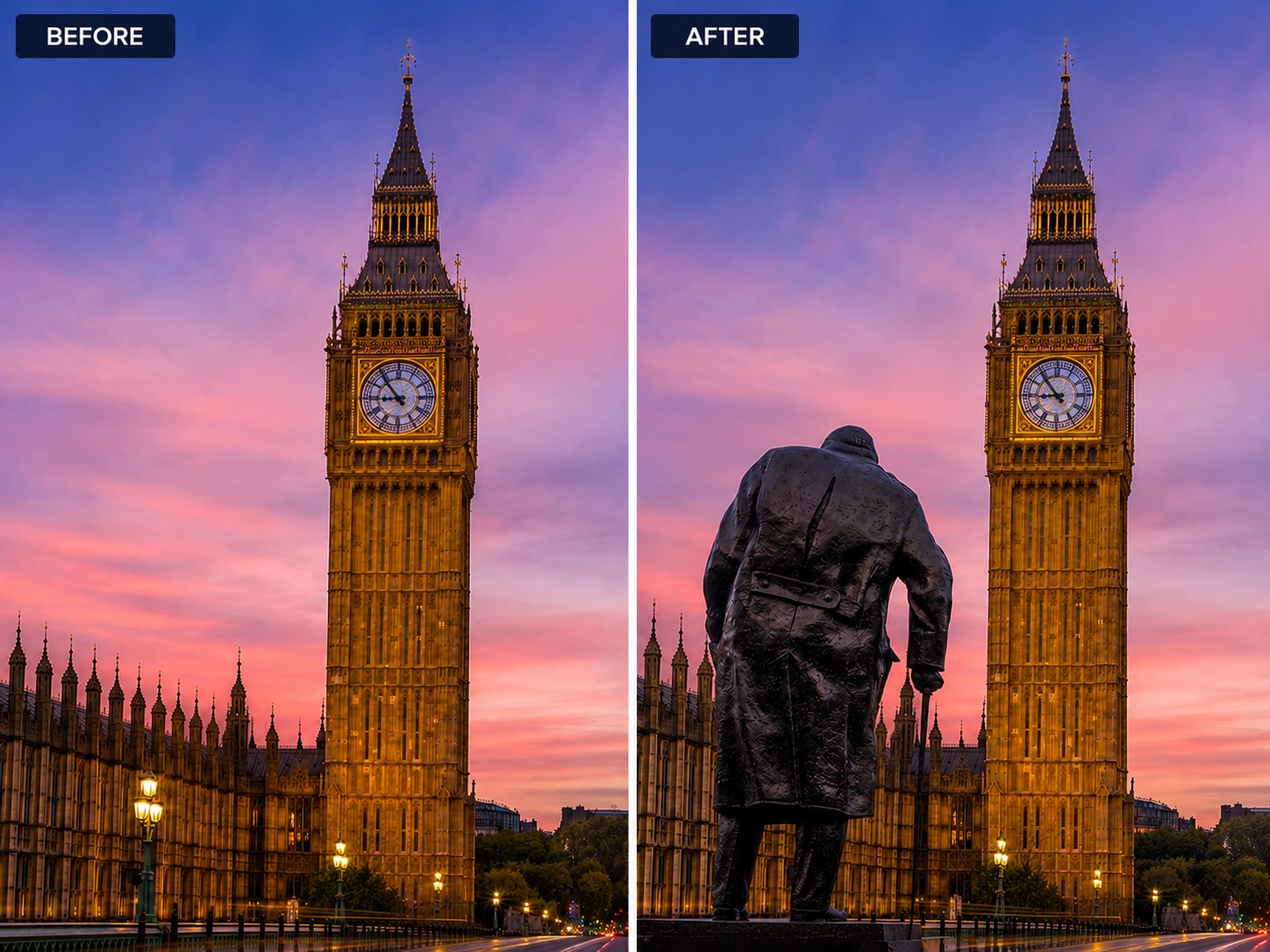
Statues, arches, columns, lampposts, fences — any man-made structure near the camera can serve as a powerful foreground anchor. The Churchill statue in front of Big Ben is a perfect example: the dark silhouette of the statue in the foreground creates a compelling contrast with the illuminated tower behind it.
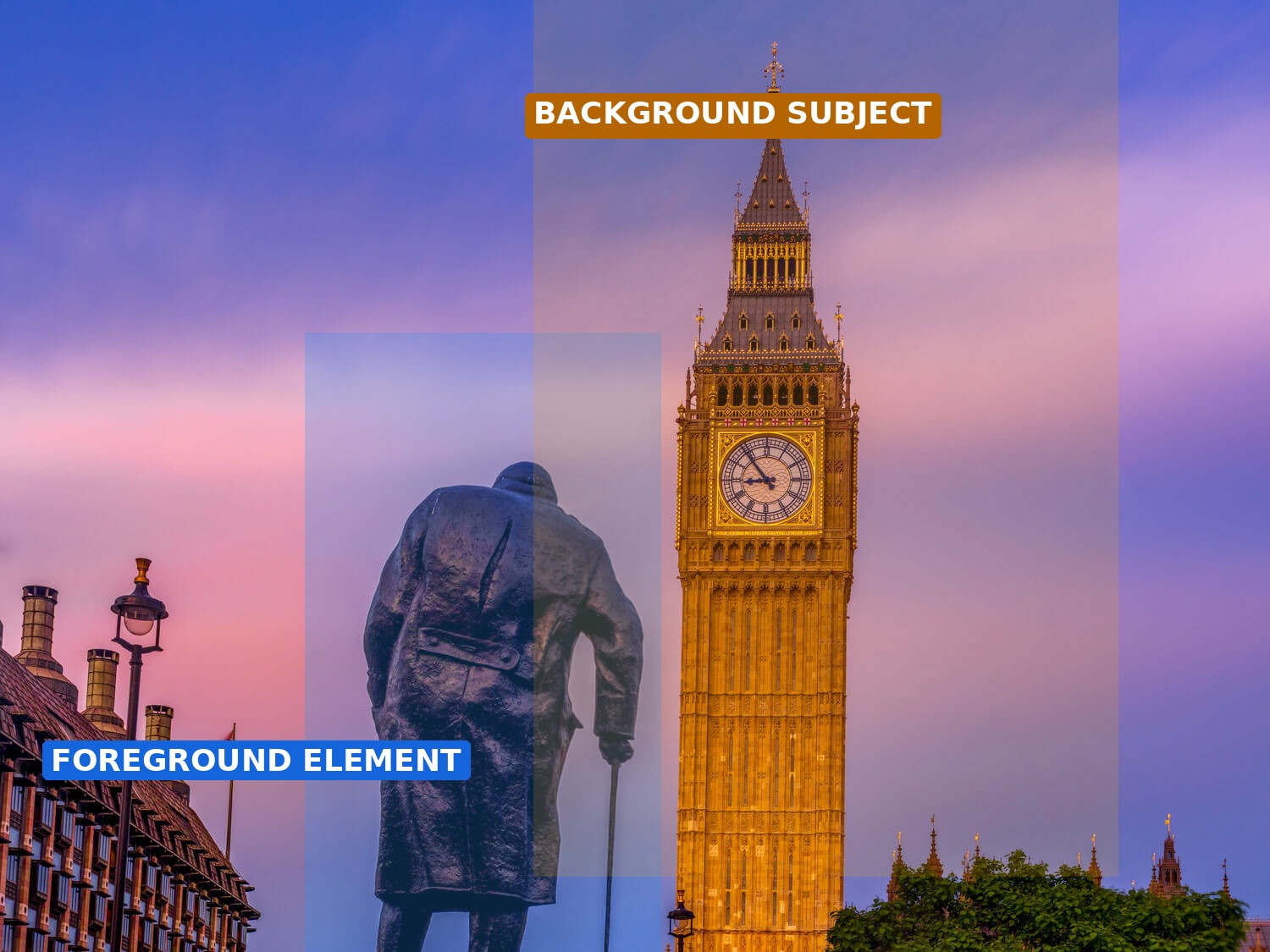
The Churchill statue acts as a strong foreground anchor, drawing the eye toward Big Ben in the background.
Street furniture & urban details
A classic Parisian lamppost, a bench, a bicycle, or even a puddle reflecting the scene — these everyday objects can transform a standard cityscape into something cinematic. The key is to position yourself so the foreground element is sharp, prominent, and placed intentionally within the frame.
Ready to get 1 on 1 support to master your tools and take photos that have that WOW factor? Apply to become a certified Master of Photography here.
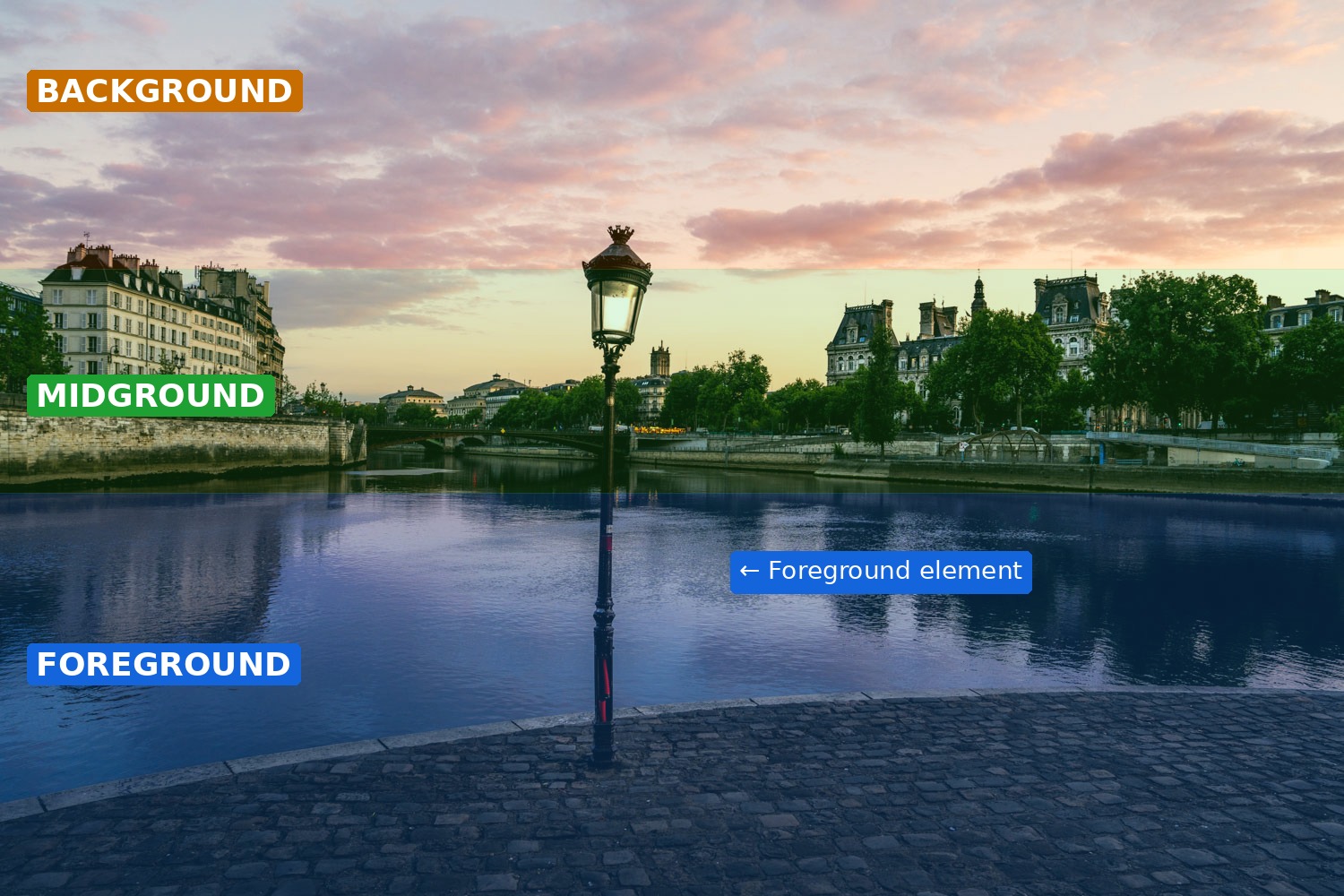
The lamppost on the banks of the Seine creates immediate depth. Your eye enters through the cobblestones, passes the light, and travels into the city.
Natural elements
Rocks, flowers, branches, water — nature offers endless foreground options. A cluster of wildflowers at the base of a mountain scene or a textured rock formation leading to a sunset can completely transform a shot.

How to Find and Use Foreground Elements: 5 Practical Tips
- Get low — crouching or shooting at ground level amplifies the apparent size of your foreground element and dramatically increases the sense of depth.
- Use a wide-angle lens — wide lenses (16–35mm) exaggerate perspective and make foreground elements appear larger relative to the background, enhancing depth.
- Keep your foreground sharp — use a small aperture (f/8–f/16) to ensure both the foreground and the background remain in focus, especially for landscapes.
- Look for leading lines — the best foreground elements don't just sit there, they guide the eye. Cobblestones, fences, rivers, or roads can lead the viewer from the foreground straight into the scene.
- Overlap layers intentionally — position yourself so the foreground, midground, and background don't all sit in separate horizontal bands. Let them overlap slightly for a more natural, organic composition.
A Quick Lightroom Tip for Foreground-Heavy Shots
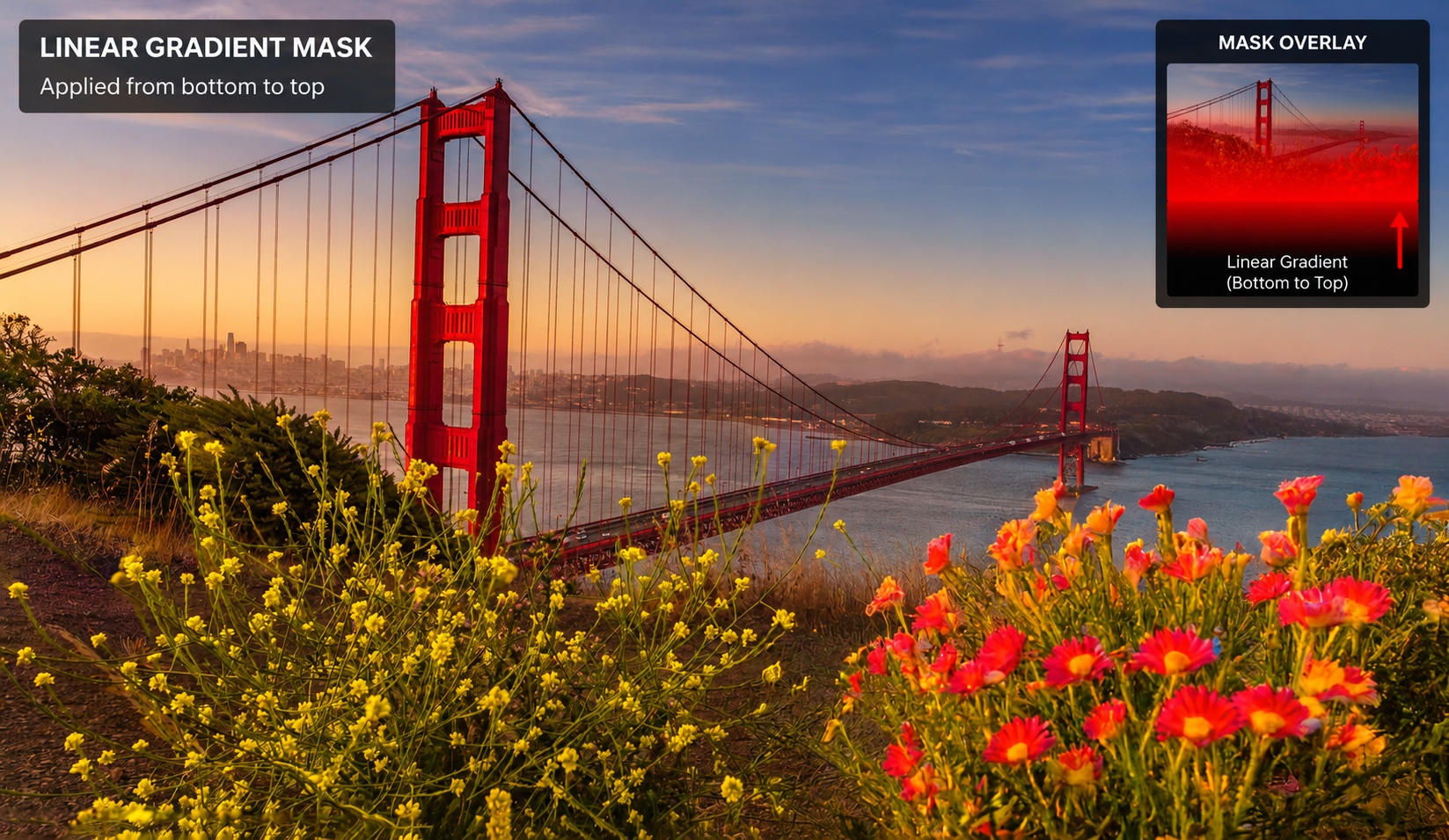
When you include a strong foreground element, the light distribution across the frame often becomes uneven — your foreground might be darker than your sky. This is where Lightroom masking becomes your best friend.
Use a Linear Gradient mask from the bottom of the frame upward to brighten the foreground independently, without touching the sky. For even more precision, use a Brush mask to paint light exactly where you need it on the foreground subject.
Ready to get 1 on 1 support to master your tools and take photos that have that WOW factor? Apply to become a certified Master of Photography here.
Key Takeaways
- Foreground elements add depth, dimension, and visual storytelling to your photos.
- They work by creating three distinct layers: foreground, midground, and background.
- Any object near the camera can serve as a foreground element — statues, lampposts, rocks, flowers.
- Get low, go wide, and keep your foreground sharp for the best results.
- Use Lightroom masking to balance exposure between your foreground and background.
Want more? Explore 10 Lightroom secrets to instantly improve your photos and the best photography locations in Paris. Love a shot? You can license my prints here.
Get my FREE Lightroom preset here: https://bit.ly/AIPresets
Serge — Photoserge | Coaching photographers who are serious about getting to the next level.
